In applications involving liquefied gases, LNG, low-temperature service or cryogenic conditions, a PSV, safety relief valve or cryogenic safety valve cannot be treated as a standard catalogue item. The solution must respond to the process, the fluid, the real operating conditions and the technical, documentation and inspection requirements of the project.
In this case, EFSVALVES was involved from the technical analysis stage, studying the most suitable solution in terms of valve type, sizing, configuration, documentation compliance, inspection requirements and functional validation.
The challenge was to transform a complex technical requirement into a verifiable, documented and project-compliant solution.
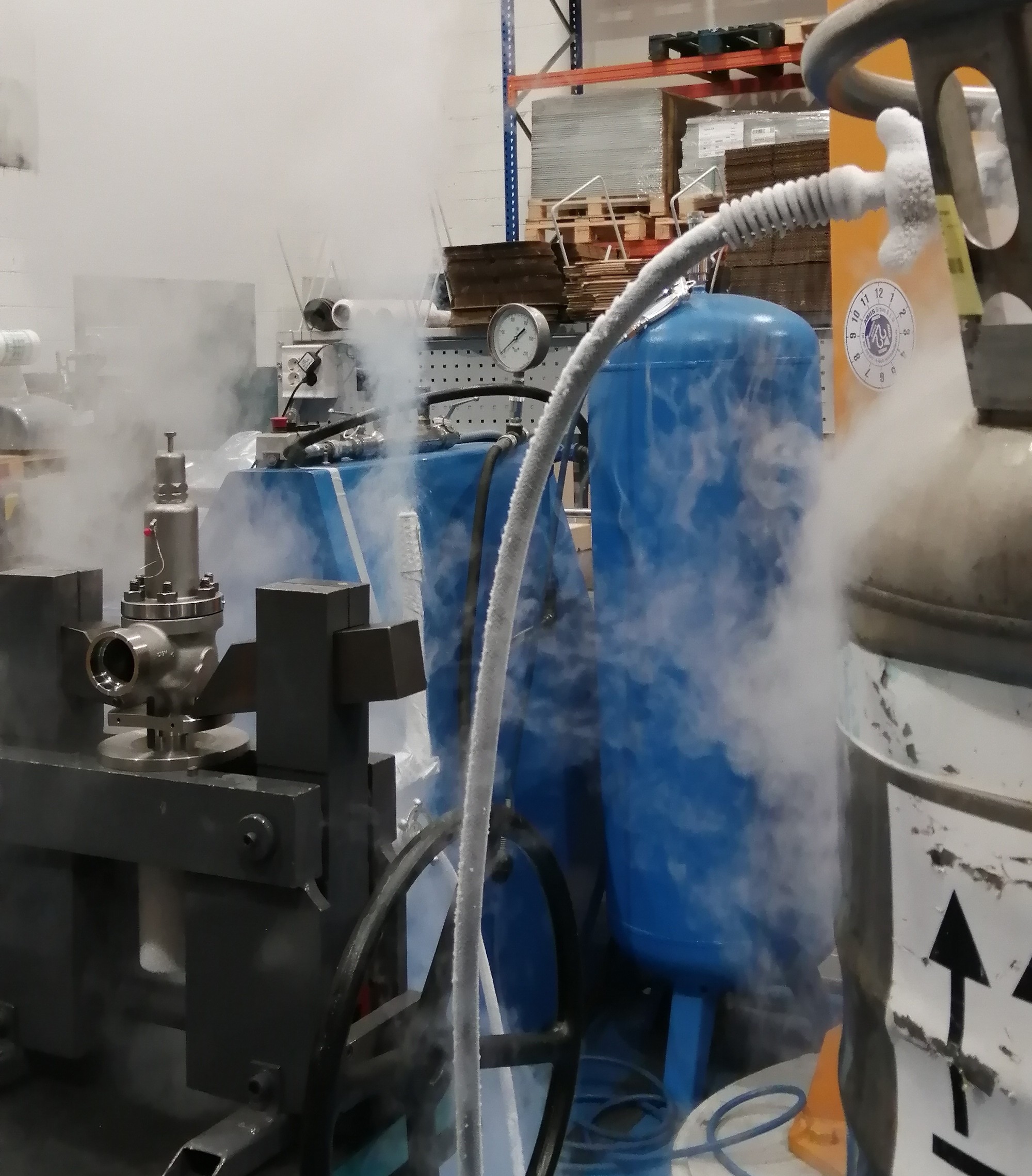
One of the customer’s specific requirements was to perform a cryogenic test for PSV service, allowing the behaviour of the valve to be observed and verified under real low-temperature or cryogenic conditions. To achieve this, a specific liquid nitrogen test was developed, adapting the test bench and auxiliary equipment required to carry out the validation in a controlled way.
This technical case study is presented in an anonymised form. Project-specific technical, commercial and identifying information has been intentionally omitted to protect confidentiality.
The Challenge: A Cryogenic PSV For Low-Temperature Service
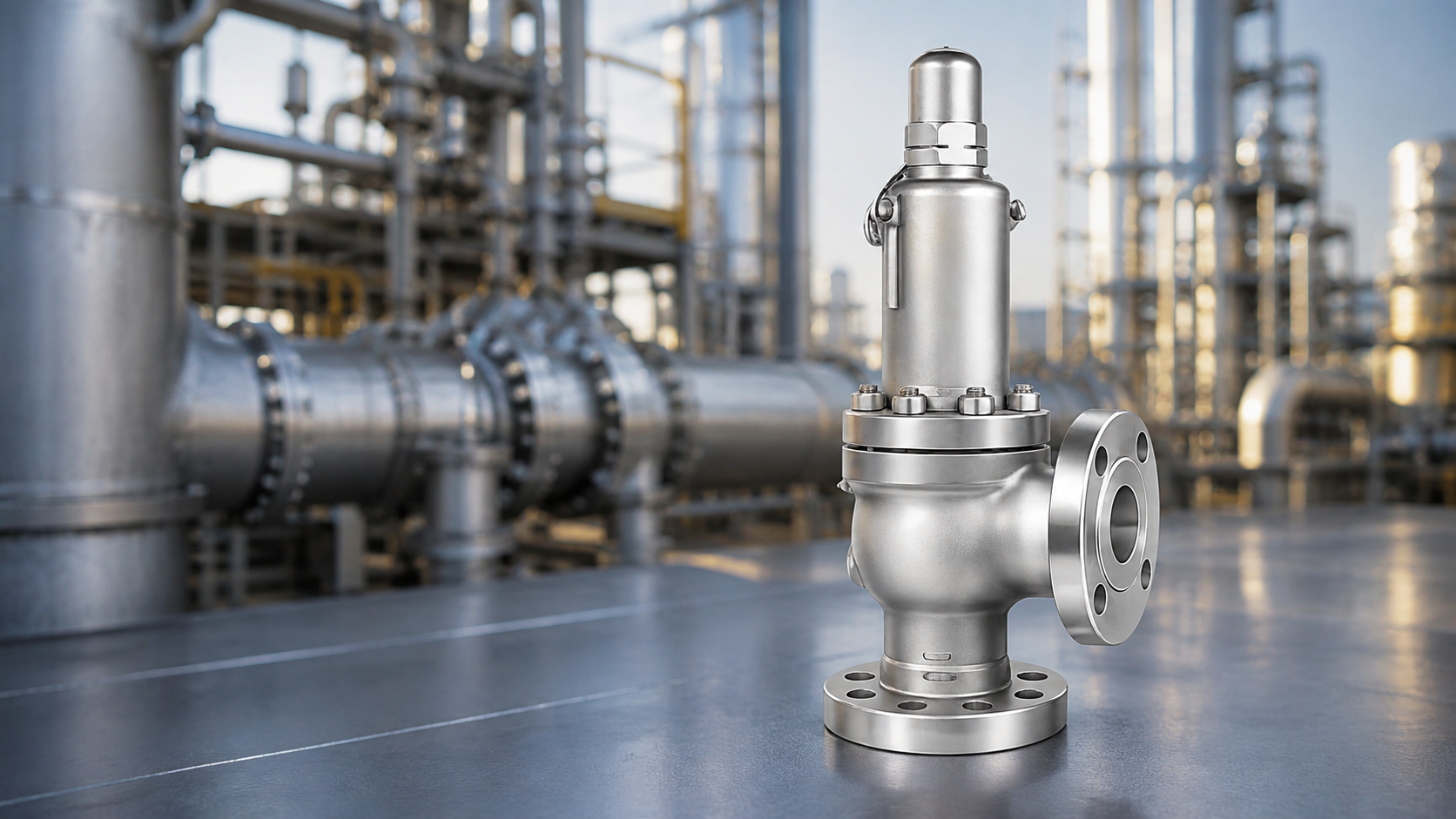
Safety relief valves intended for cryogenic service, also referred to as cryogenic safety valves, safety relief valves for cryogenic service or cryogenic PSV, must be analysed with particular care.
At low temperatures, the behaviour of materials, internal components, sealing surfaces, gaskets, tolerances and tightness systems may differ significantly from conventional service conditions.
For this reason, selecting a suitable safety relief valve was not enough. It was necessary to study the service, review the sizing, confirm the suitability of the proposed configuration and define a validation route compatible with the customer’s requirements and the project specifications.
The objective was to reduce risk before installation, providing a technically justified, tested and properly documented solution.
Technical Analysis And Adaptation Of The Safety Relief Valve
EFSVALVES worked on the complete analysis of the project requirement, taking into account the application, service conditions, inspection needs, required documentation and suitability of the safety relief valve for the cryogenic environment.
This analysis included the review of the most appropriate valve solution, sizing verification, coordination with manufacturing and preparation of the documentation required to ensure supply traceability.
In this type of project, the value is not only in delivering a PSV. The value lies in understanding what the customer really needs, adapting the solution to those needs and ensuring that every critical stage is properly controlled.
Development Of A Specific Cryogenic Test For PSV
One of the most relevant parts of the project was the development of a cryogenic test using liquid nitrogen.
To do this, EFSVALVES studied the technical requirements, the applicable standards, the service conditions and the specific needs of the customer. Based on this analysis, a test procedure was prepared to verify the functional behaviour of the valve under real low-temperature conditions.
The test was not simply a pressure test. It was intended to reproduce a demanding scenario that would allow the response of the cryogenic safety valve to be checked under real conditions and its behaviour confirmed before final release.
| Validation aspect | Purpose |
|---|---|
| Low-temperature exposure | Confirm the valve behaviour under cryogenic conditions. |
| Functional response | Verify that the valve operates according to the defined project requirements. |
| Test procedure | Ensure the validation is controlled, repeatable and aligned with the agreed inspection route. |
| Documentation | Record the test evidence as part of the final project quality dossier. |
Adaptation Of The Test Bench For Liquid Nitrogen Testing
The use of liquid nitrogen requires specific preparation of the test environment. The test bench, lines, accessories, connections and auxiliary equipment must be suitable for controlled operation under very-low-temperature conditions.
During the test, the visible cold vapour around the equipment is caused by the condensation of ambient air when it comes into contact with surfaces exposed to cryogenic temperatures. It provides a clear visual indication of the demanding nature of this type of validation.
The adaptation of the test bench was an essential part of the project, allowing the liquid nitrogen test to be carried out in a controlled manner and in line with the defined requirements.
Inspection, NDT And Quality Documentation
In critical projects, documentation is part of the solution.
The supply is not limited to delivering a manufactured safety relief valve. A clear documentation route must exist to verify materials, inspections, tests, marking, traceability and final conformity.
In this case, the documentation management included coordination of the Inspection and Test Plan, material controls, visual inspection, non-destructive testing, cryogenic testing, hydrostatic testing, functional verification, leakage test, dimensional control, marking review and preparation of the final quality dossier.
This is especially important in industrial projects involving the customer, engineering company, inspection body and end user. A technical or documentation deviation can lead to delays, rejection during inspection or issues during commissioning.
Test Result
The cryogenic test was successfully carried out and allowed the response of the valve to be verified under real low-temperature conditions.
In addition to meeting the specific need of the project, this experience confirmed the potential of this type of validation for applications involving liquefied gases, LNG, cryogenic storage, industrial gases and processes where the reliability of the PSV or safety relief valve is critical.
The result was not only a successful test. It confirmed a working methodology based on technical analysis, project adaptation, functional validation and documentation control.
Beyond A Standard Valve
This case shows that, in special applications, a cryogenic PSV should not be approached as a standard product.
A safety relief valve for cryogenic service requires technical judgement, analysis capability, documentation experience and coordination between design, manufacturing, inspection and testing.
EFSVALVES adds value precisely at this point: helping the customer transform a complex requirement into a technically suitable, validated and properly documented solution.
Conclusion
The liquid nitrogen cryogenic test was the most visible part of the project, but there was much more behind it: requirement analysis, selection of the optimum solution, sizing review, test bench adaptation, procedure preparation, inspection coordination, NDT, traceability and final quality dossier.
This case reflects EFSVALVES’ ability to support PSV, safety relief valve and cryogenic safety valve projects in critical applications, where supplying a valve is not enough. It is necessary to understand the service, adapt the solution, validate the behaviour and document every relevant step of the project.