EFSVALVES expands its pressure-control portfolio with the EF712 and EF718 thermoplastic pressure relief valves. The two ranges are intended for chemical dosing, water and wastewater treatment, desalination and other corrosive liquid services where pressure control and material compatibility must be evaluated together.
Why thermoplastic construction matters for pressure relief
In chemical dosing lines, water-treatment installations and desalination plants, material selection can be as important as the pressure-control function itself. Depending on the fluid, operating envelope and piping system, metallic, lined or thermoplastic constructions may all be considered.
Thermoplastic valves provide an alternative for liquid services where corrosion resistance, compatibility with plastic piping and process conditions favour this type of construction. Building on its experience in safety and relief equipment, EFSVALVES has extended its range with two complementary platforms: the compact EF718 and the EF712, which reaches nominal diameters up to DN100.
Pressure control in chemical dosing and process systems
Metering and oscillating pumps can generate pressure fluctuations and pulsation. Depending on how the system is arranged, a pressure relief or pressure-retaining valve can help maintain the required upstream pressure or divert excess pressure through a bypass when operating conditions change.
The valve therefore has to be selected for its real hydraulic function, not from its name alone. Set pressure, flow to be bypassed, pump behaviour, downstream pressure and installation layout all influence the final configuration.
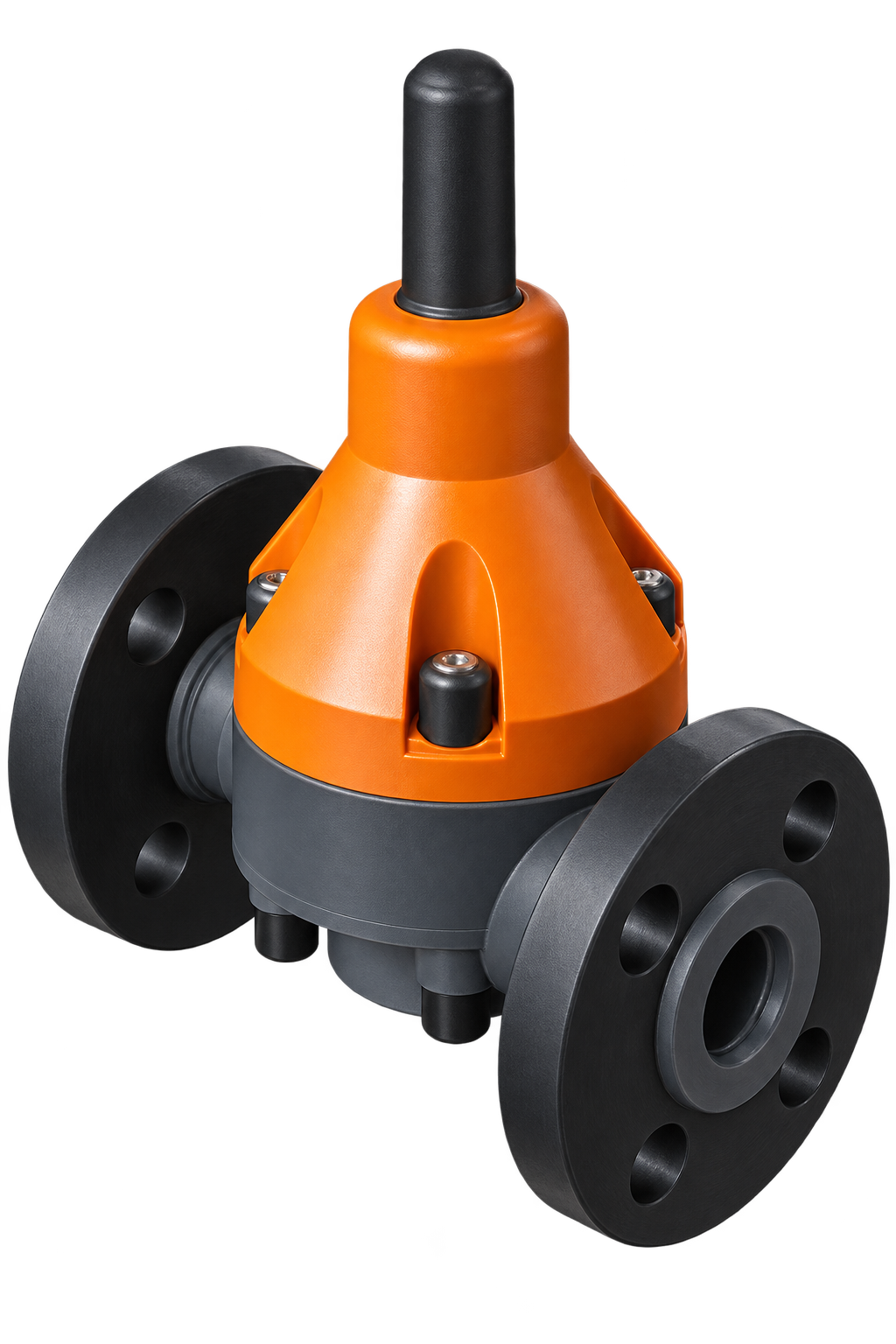
EF718: compact relief and upstream-pressure stabilisation
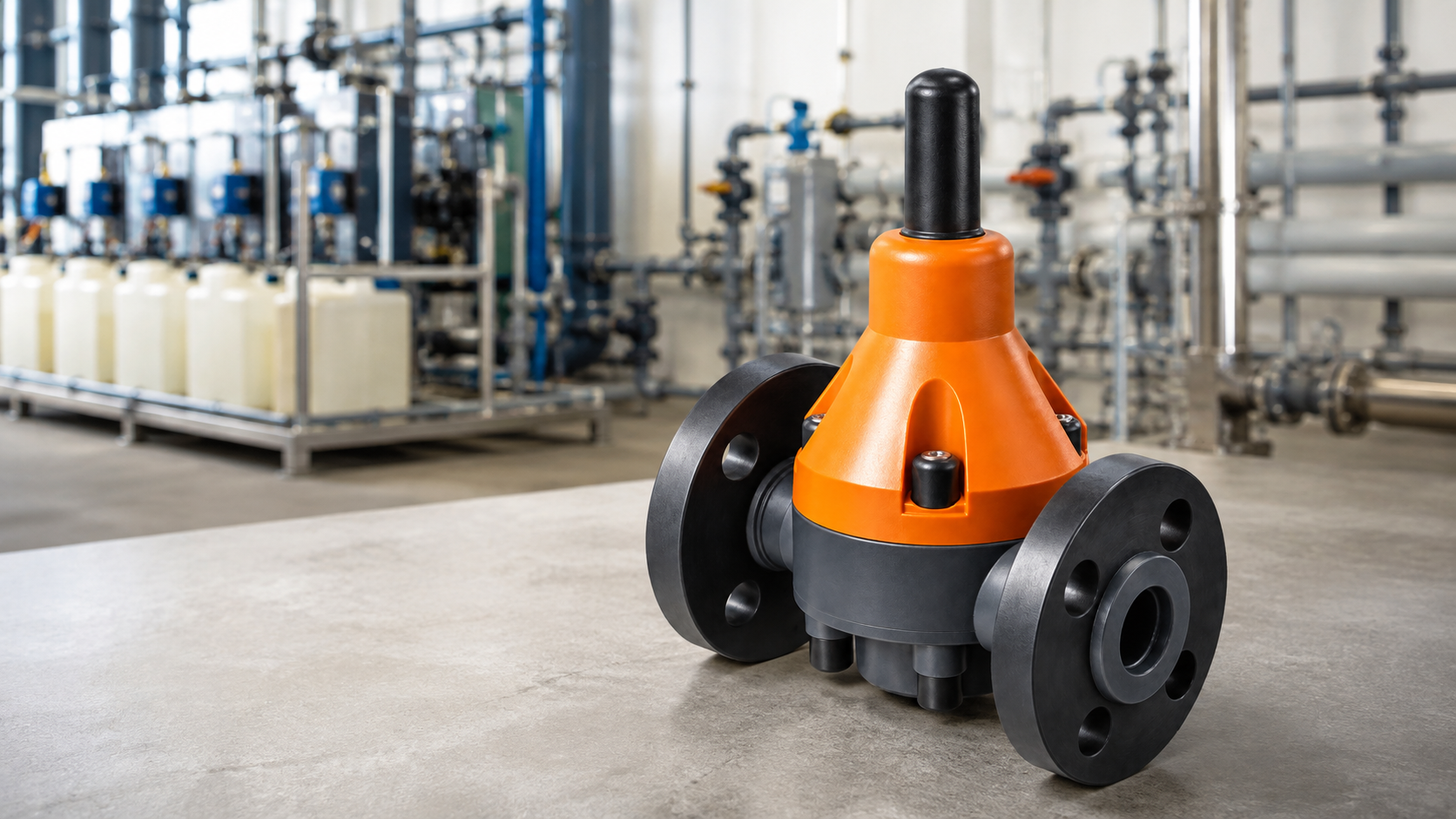
The EF718 is a direct media-operated, diaphragm-controlled valve for pressure relief and upstream-pressure stabilisation in liquid systems. It is designed for bypass installation and is particularly suited to compact dosing and process duties with pulsating or oscillating pumps.
The range covers DN8 to DN50 with an adjustable pressure range of 0.5 to 10 bar. Available body materials and connections depend on size: configurations include PVC-U, PP and PVDF, with socket, spigot, fixed-spigot or flanged ends as applicable. EPDM or FPM seals and a PTFE-coated EPDM diaphragm are available according to configuration.
EF712: thermoplastic pressure control up to DN100
The EF712 is a diaphragm-controlled pressure-maintaining and relief valve for corrosive liquid systems. It combines compact DN10–DN50 configurations with larger DN65–DN100 versions, extending thermoplastic pressure control to industrial piping systems that require greater nominal diameters.
Its overall adjustable pressure range is 0.3 to 10 bar, with the exact range dependent on size and configuration; DN100 versions are available up to 6 bar. Body options include PVC-U, PP and PVDF, while selected compact configurations are also available in PTFE+C. Connection options include socket, spigot, fixed spigot and flanged ends.
EF712 and EF718 at a glance
| Range | Nominal sizes | Adjustable pressure | Typical role |
|---|---|---|---|
| EF718 | DN8–DN50 | 0.5–10 bar | Compact dosing, bypass relief and upstream-pressure stabilisation |
| EF712 | DN10–DN100 | 0.3–10 bar overall; DN100 up to 6 bar | Compact and larger thermoplastic liquid-process systems |
These figures define the extent of the product families, not a universal operating envelope. The permissible pressure and temperature for a supplied valve depend on its material, size, connection, elastomers and complete configuration.
Material selection for corrosive liquid service
PVC-U, PP and PVDF provide different combinations of chemical compatibility, temperature capability and mechanical performance. PTFE-based components are incorporated where applicable, and the EF712 also offers selected PTFE+C body configurations.
The final choice must be checked against the actual fluid composition and concentration, operating and cleaning temperatures, pressure cycle, diaphragm and sealing materials, and the pressure-temperature limits of the assembled valve. This is especially important with thermoplastics because allowable operating pressure changes with temperature.
Chemical dosing in water treatment and desalination
Water and wastewater treatment plants use chemical dosing at several process stages. Desalination and reverse-osmosis installations may also require dosing for pretreatment, conditioning and supporting process duties. These systems often combine thermoplastic piping, chemically aggressive liquids and metering pumps.
Typical applications for the EF712 and EF718 include:
- chemical dosing and injection systems;
- water and wastewater treatment;
- desalination and reverse-osmosis plants;
- metering and oscillating pump installations; and
- pump protection and upstream-pressure stabilisation.
Extending the EFSVALVES pressure-control capability
The EF712 and EF718 complement the wider EFSVALVES Safety & Relief range, but they do not replace conventional metallic pressure safety valves. They address liquid-process duties where relief, pressure retention or pressure stabilisation must be combined with the material requirements of chemical and water-treatment systems.
Frequently asked questions
What is the difference between the EF712 and EF718?
The EF718 is the compact range for DN8–DN50 dosing and bypass duties. The EF712 covers DN10–DN100 and adds larger thermoplastic configurations for industrial liquid-process systems.
Can both valves be used with corrosive chemicals?
They are offered in corrosion-resistant thermoplastic configurations, but suitability cannot be assumed from the material name alone. Fluid composition, concentration, temperature, pressure, elastomers and all wetted components must be reviewed for each application.
Why does pressure rating change with temperature?
The mechanical properties of thermoplastics vary with temperature. The permissible pressure of the complete valve must therefore be checked at the actual operating temperature rather than taken from a nominal room-temperature value.
Are the EF712 and EF718 conventional certified safety valves?
No general equivalence should be assumed. They are thermoplastic pressure-control and relief products for liquid-process systems. Where a certified safety function is required, the applicable code, conformity route and valve technology must be assessed separately.
Explore the product range
EF712 Thermoplastic Pressure Relief Valve →
EF718 Thermoplastic Pressure Relief Valve →