This case study has been anonymised. The end user, exact plant location and detailed process conditions are not disclosed. Selected project data have been generalised to protect customer and engineering confidentiality.
A chemical processing plant in North Africa needed to replace a series of automated plug valves handling highly corrosive acidic process streams. Chemical resistance was essential, but it was only one part of the replacement challenge.
The new valves also had to be delivered as complete pneumatic assemblies, close safely through spring-return actuation and, for the principal DN80 and DN100 groups, fit an existing piping arrangement with a face-to-face dimension different from the standard valve configuration.
A Valve Configuration Selected for Corrosion and Retrofit Requirements
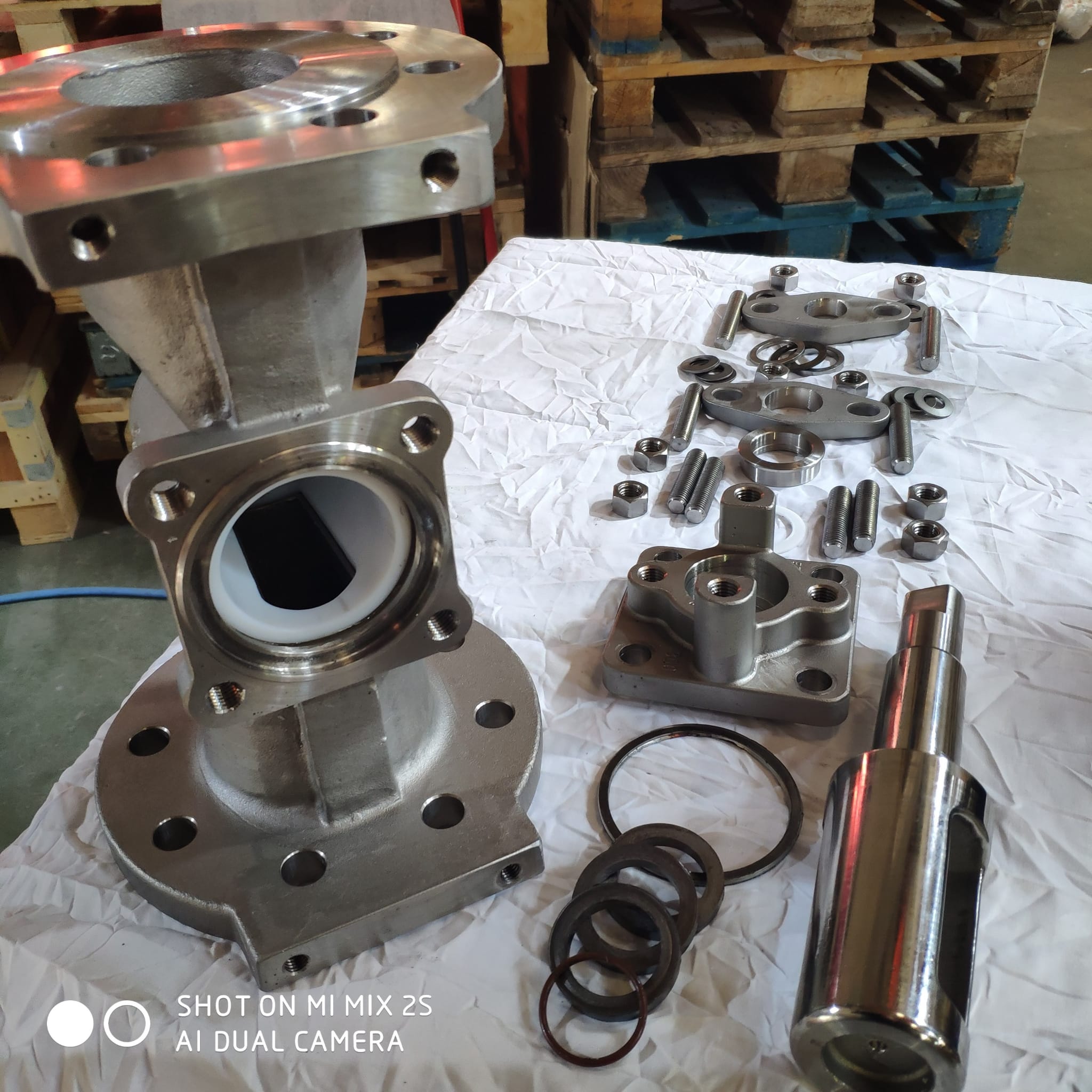
The valves were intended for aggressive acidic streams, including phosphoric and sulphuric acid services at different concentrations. For the main DN80 and DN100 groups, the selected construction combined an ASTM A351 CF3M stainless steel body with PTFE-coated process-contact surfaces.
The PTFE protection addressed the chemical duty, while the cast CF3M body offered a second advantage: it provided the manufacturing flexibility needed to reproduce the non-standard face-to-face dimension of the valves being replaced.
The construction was therefore chosen not only for corrosive service. It also provided a practical route to develop the replacement around the existing installation rather than modifying the plant around a standard valve.
Automation Was Part of the Valve Package
The customer required complete pneumatic operation. Actuator selection could therefore not be based on nominal valve size alone. The actual operating torque of the plug valve was evaluated, and the spring-return pneumatic actuator was sized to provide sufficient closing torque under the specified conditions.
The required failure action was clear: the actuator had to drive the valve to the closed position when pneumatic power was lost.
| Package element | Engineering purpose |
|---|---|
| Spring-return pneumatic actuator | Provide the required operating torque and fail-safe closing action. |
| Limit switch box | Provide local and remote valve position indication. |
| Air pressure regulator | Condition and regulate the pneumatic supply for the actuator package. |
| Pneumatic control accessories | Implement the specified operating and failure philosophy. |
| Complete mechanical mounting | Integrate valve stem, bracket, coupling and actuator as one assembly. |
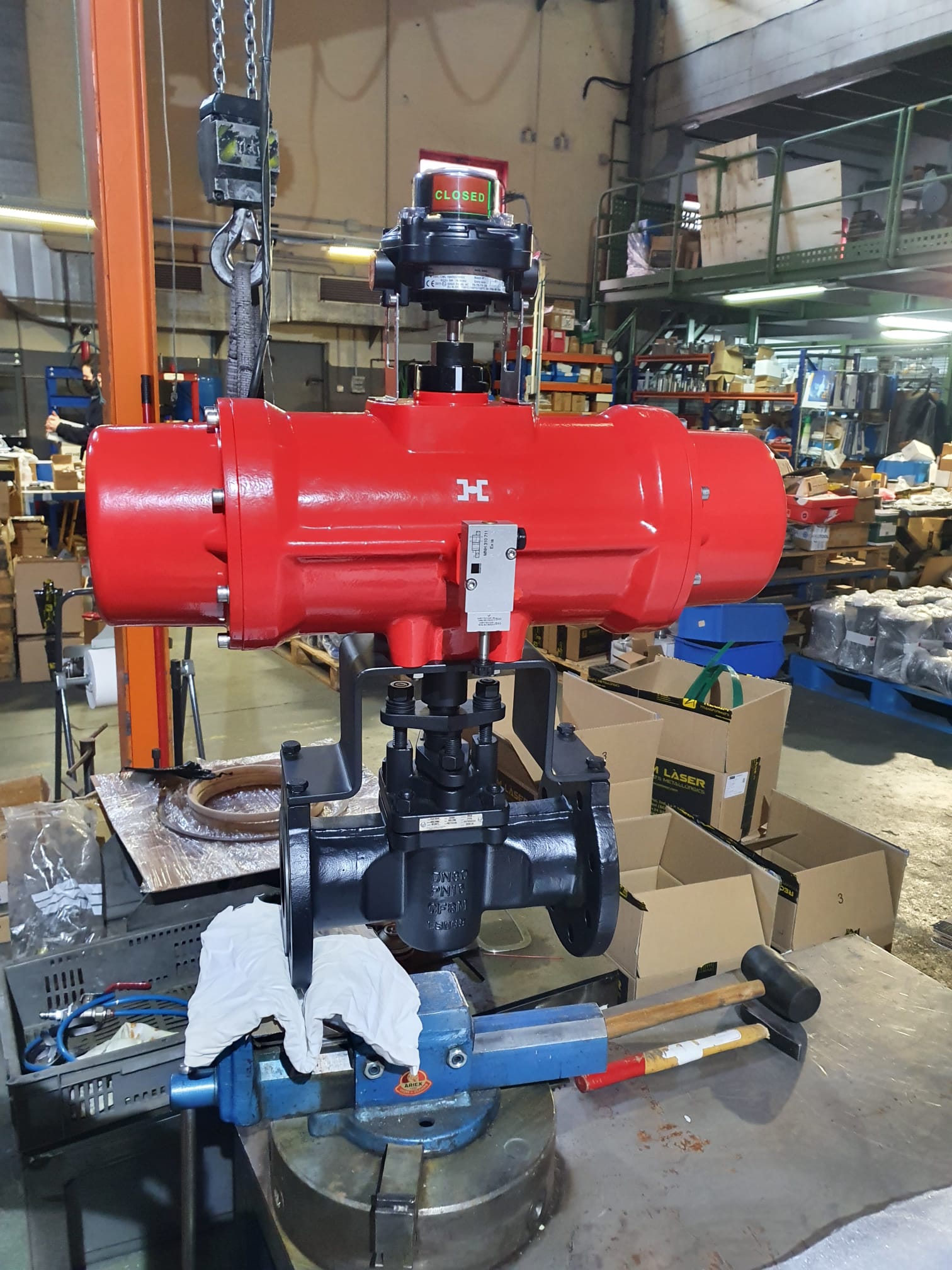
By treating automation as part of the valve package, valve torque, actuator output, mounting and position feedback could be verified together before the assembly reached site. The customer received a finished automated valve rather than separate components still requiring integration during installation.
The Existing Piping Introduced a Dimensional Constraint
The chemical and automation requirements could be met with the selected architecture, but the retrofit introduced another constraint: the existing valves did not share the face-to-face dimension of the standard replacement design.
This issue is easily underestimated in brownfield projects. A valve can have the correct nominal size, pressure class, material and operating function and still fail as a practical replacement if it does not fit between the existing flanges.
Modifying the surrounding piping or adding individual transition pieces at each position would have transferred the problem to site. The number of identical DN80 and DN100 valves made a more repeatable solution possible.
When Project Quantity Makes a Dedicated Casting Practical
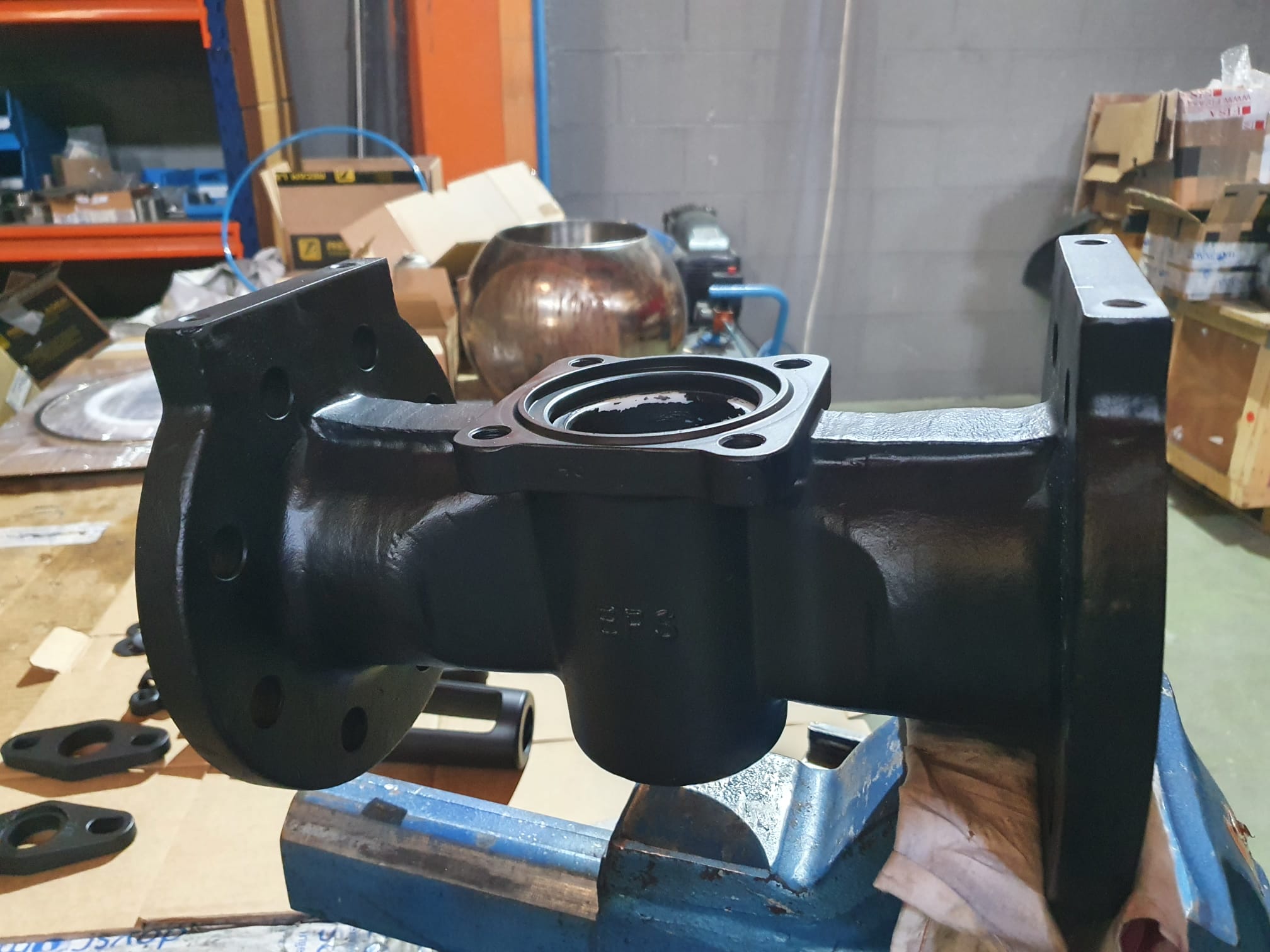
The required quantity justified a project-specific casting configuration. The non-standard face-to-face dimension could therefore be incorporated directly into the valve body and repeated across the group of valves.
What might otherwise have become a series of individual piping modifications was converted into a controlled, repeatable replacement solution. This is an important principle in retrofit engineering: customisation does not always mean producing an expensive one-off valve.
For a single unit, developing a dedicated casting may not be reasonable. When enough identical valves share the same dimensional requirement, adapting the manufacturing configuration can be more practical than modifying the plant repeatedly. In this project, quantity changed what was technically and commercially viable.
From CF3M Body to Complete Automated Assembly
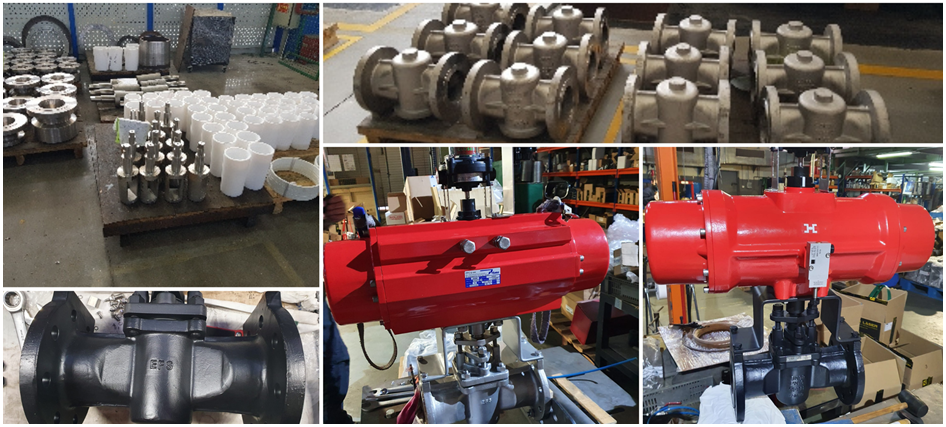
The workshop stages show how the finished solution was built. Production began with the CF3M metallic body and the geometry required by the project. Process-contact areas were then protected with PTFE for the acidic service.
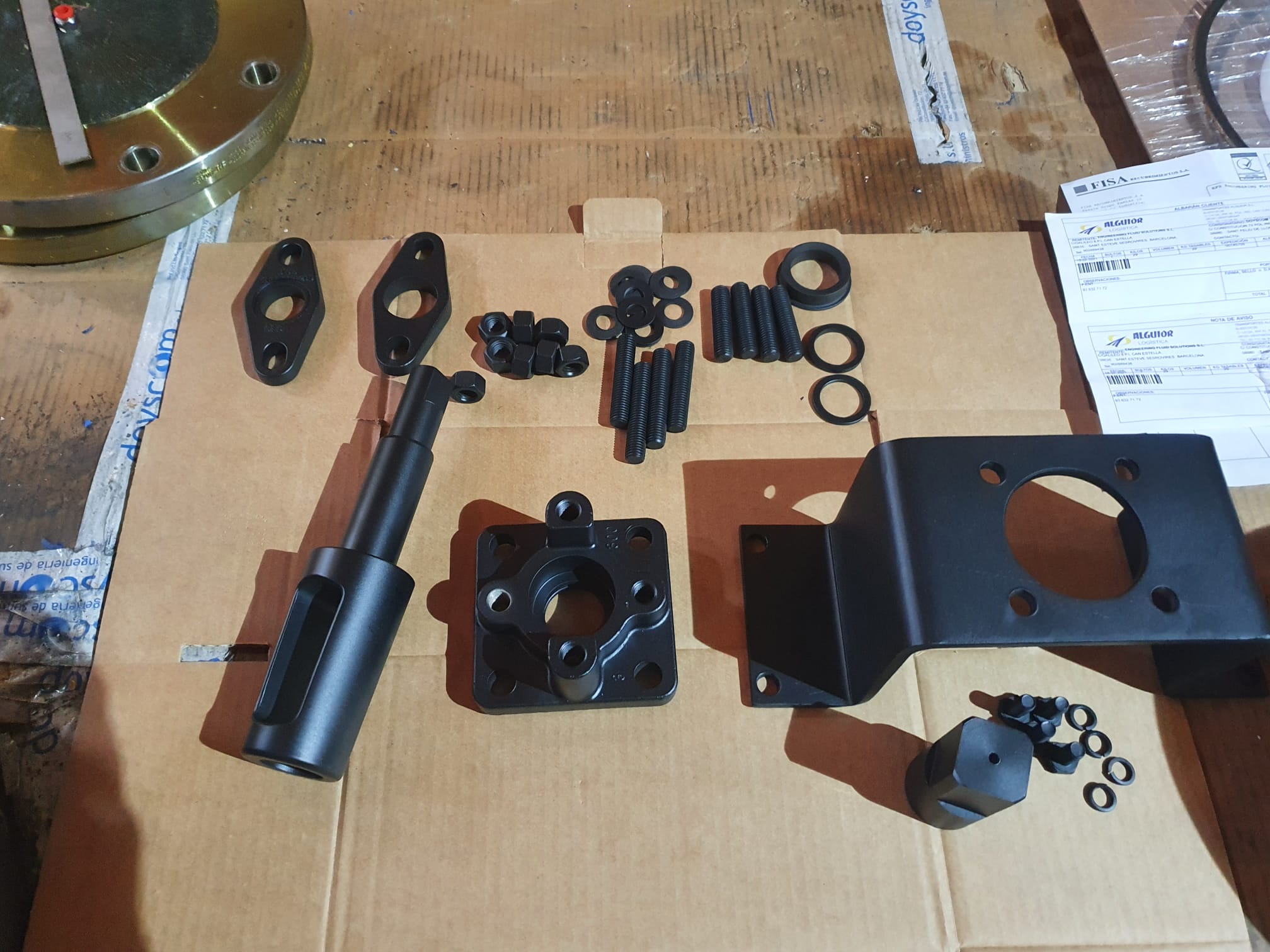
Once the valve was complete, the pneumatic package was integrated. The actuator selected from the torque study, limit switch box, pressure regulation, control accessories and mechanical mounting formed one finished assembly.
The final valve brought together requirements that could not be considered independently: chemical compatibility, PTFE protection, operating torque, fail-safe pneumatic action, automation accessories and the physical dimensions already present in the plant.
Project Result
The retrofit delivered a repeatable automated plug valve solution developed around the actual process and installation constraints. The main DN80 and DN100 units combined CF3M construction, PTFE-coated process-contact surfaces, spring-return pneumatic automation and a project-specific face-to-face dimension.
The valves arrived as complete assemblies with automation accessories already integrated and actuators selected to ensure the required closing function. Most importantly, the dimensional mismatch was solved at valve level rather than passed on to the surrounding piping.
Replacing an existing valve requires more than matching its nameplate. Chemical compatibility, operating torque, failure position, automation and the dimensions already installed in the plant must be evaluated together.
Frequently Asked Questions
Why use PTFE protection on a CF3M plug valve?
PTFE can protect process-contact surfaces exposed to aggressive chemicals. Suitability depends on the actual fluid, concentration, temperature, pressure and valve construction and must be assessed for each application.
Why should actuator sizing consider valve torque?
The actuator must deliver sufficient output to operate the actual valve under the specified conditions. For spring-return service, the available closing torque and required failure movement are particularly important.
What can a complete automated plug valve package include?
The package may include the valve, pneumatic actuator, limit switch box, air pressure regulator, control accessories and the complete mechanical mounting arrangement.
Can a plug valve be manufactured with a non-standard face-to-face dimension?
In some projects, yes. Feasibility depends on design, size, pressure class, required geometry and quantity. A sufficient number of identical units can make a dedicated casting technically and commercially practical.
What should be checked when replacing existing plug valves?
Beyond nominal size and pressure class, the review should cover the process fluid, chemical compatibility, face-to-face dimension, flange arrangement, operating torque, failure position and automation requirements.
Related EFSVALVES Plug Valve Solutions
EFSVALVES develops plug valve configurations for corrosive and demanding process applications, including special materials, PTFE-based protection, pneumatic automation and project-specific dimensional requirements. Explore Flow Control Exotic Materials →
The EF52 Sleeve Type Soft-Sealing Plug Valve uses a different architecture from the PTFE-coated retrofit described here, but belongs to the same application cluster for corrosive service, specialised materials and engineered flow control.
Share the existing valve data, process conditions and installation constraints so the appropriate valve and automation package can be assessed. Discuss your application with our engineering team →