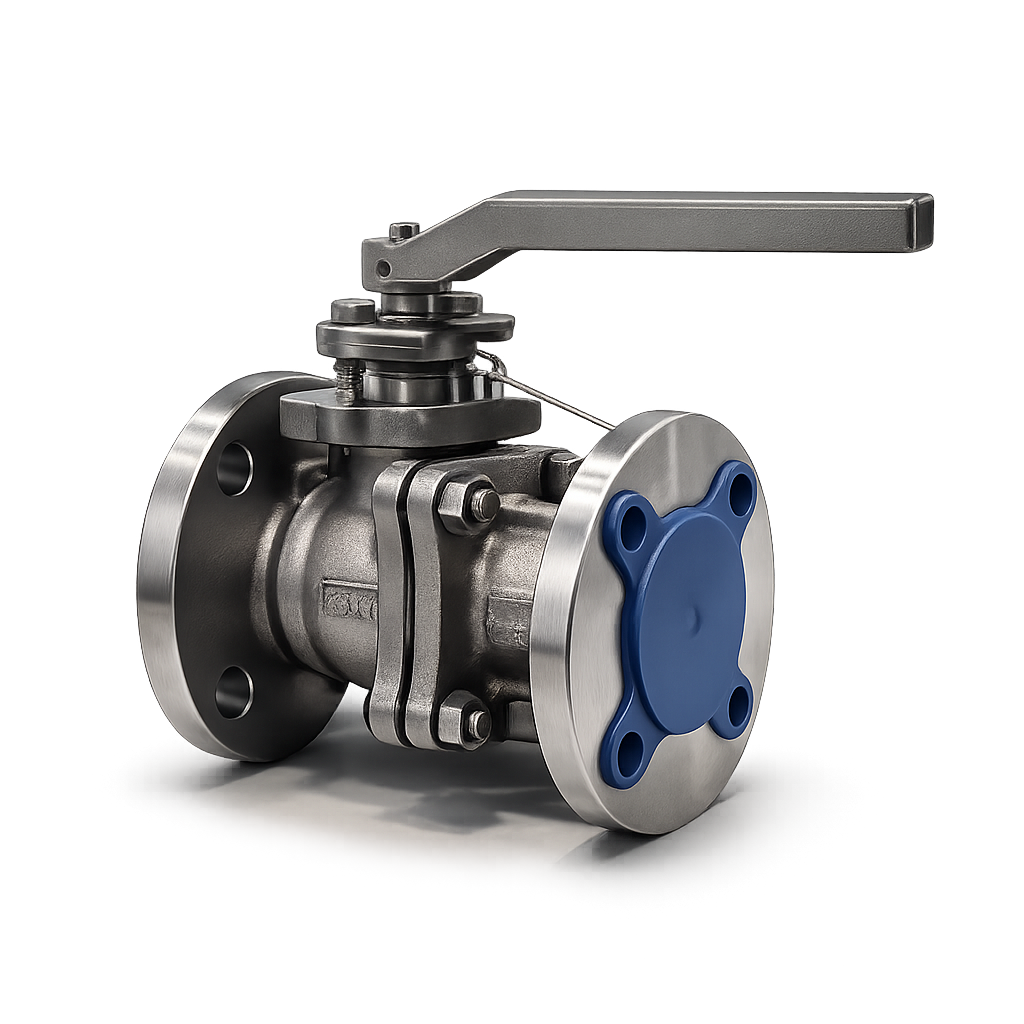
THERMOPLASTIC BALL VALVE

EFC200
  • Industrial thermoplastic ball valve for chemical and corrosive liquid isolation duties
  • PVC-U, PP or PVDF construction with PTFE ball seats
  • Manual, pneumatic or electric operation with DIN EN ISO 5211 actuator interface
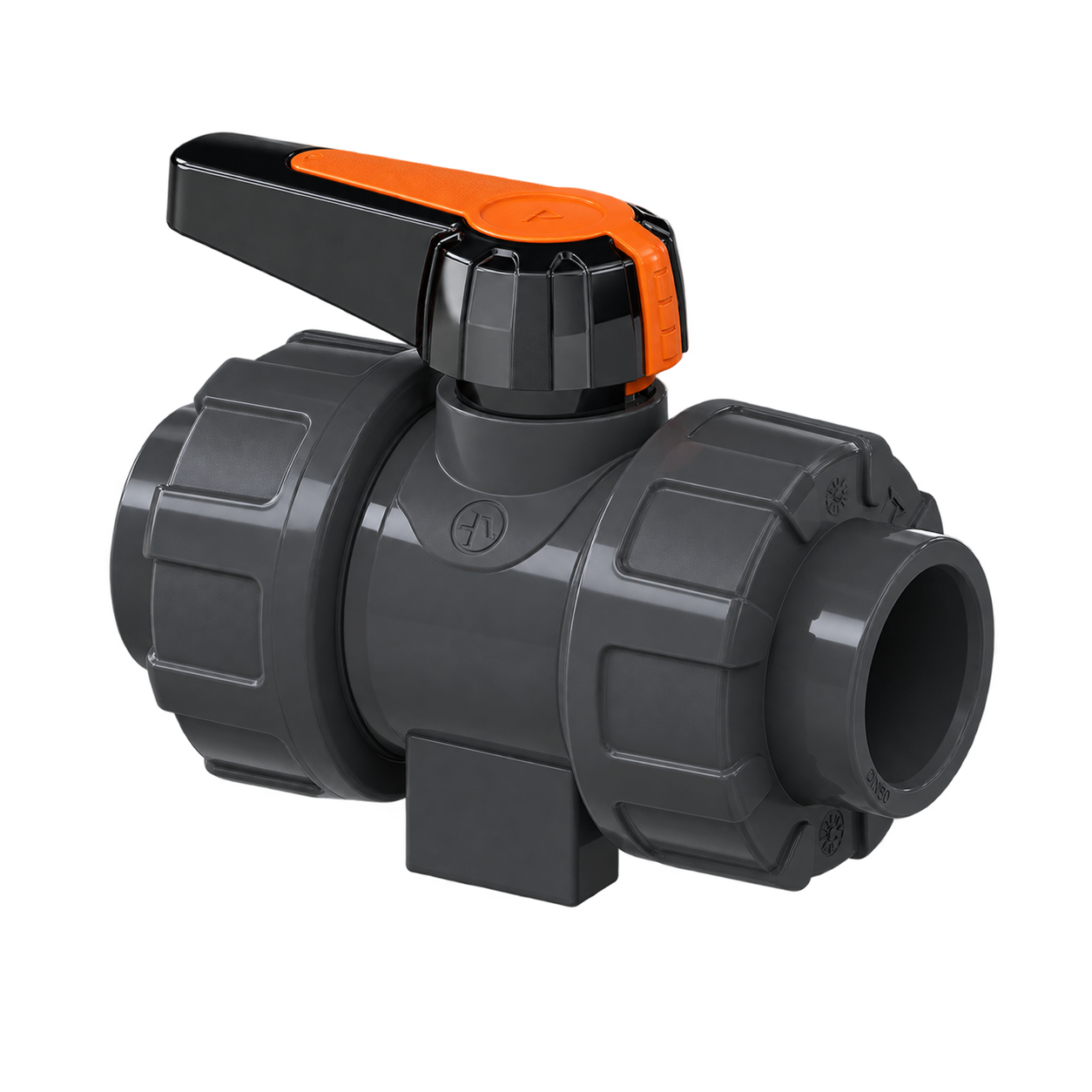
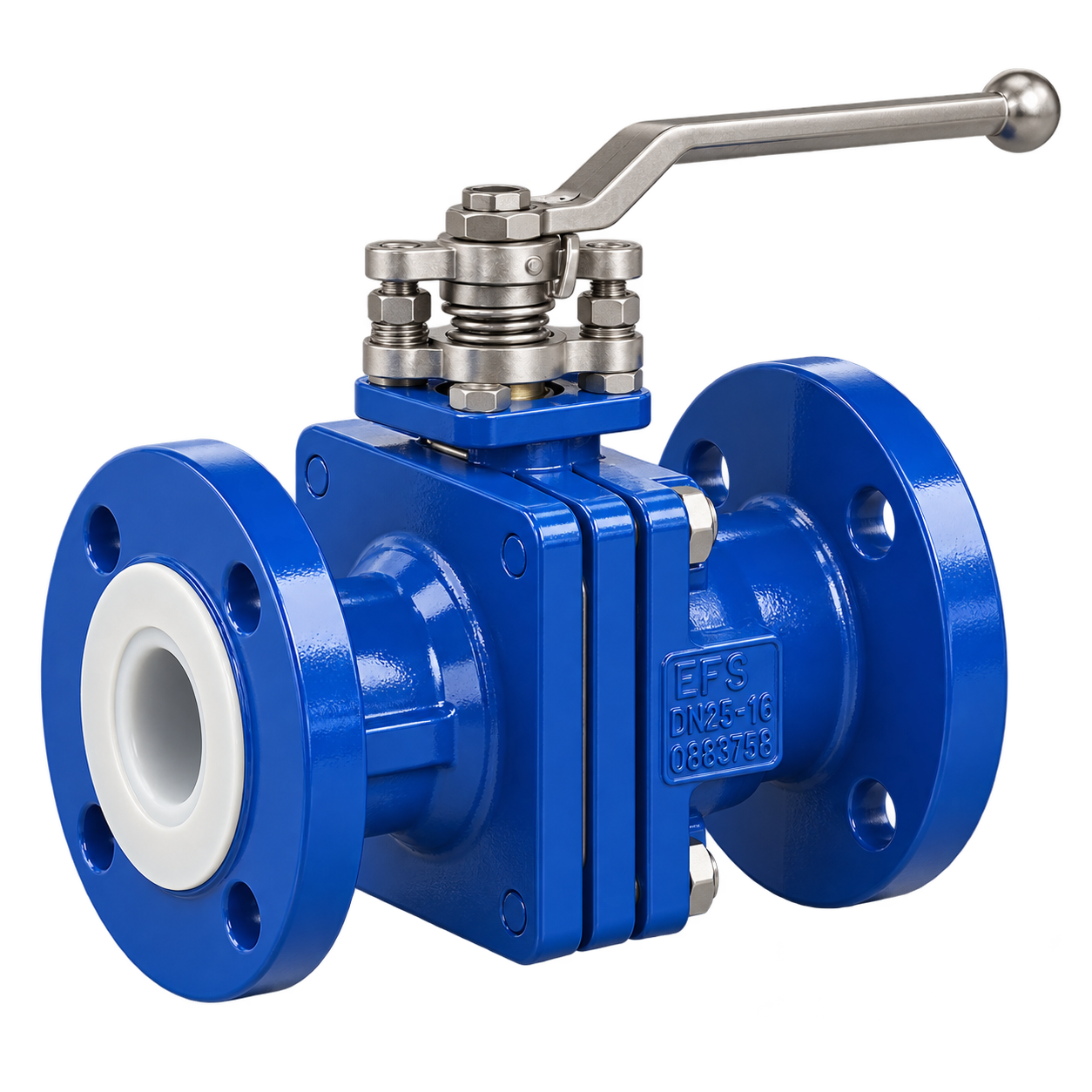
EFC200 thermoplastic ball valve in PVC-U with lockable manual lever

Applications

Configured Service Scope
Chemical
Chemical Processing
Corrosive Service
Liquid Service

Key Specifications

NOMINAL SIZESDN10 to DN50 (3/8” to 2”)
NOMINAL PRESSUREPN10 to PN16 at 20°C, material dependent
BODY MATERIALSPVC-U / PP / PVDF
SEAT AND SEALSPTFE ball seat / EPDM or FPM O-rings
CONNECTIONSSocket / Spigot / Threaded / Flanged, configuration dependent
OPERATIONLockable lever / pneumatic actuator / electric actuator
TESTINGDIN EN ISO 16135 / ISO 9393 / leakage rate A to DIN EN 12266

Selection & RFQ Assistant

Help us identify the right solution
Guided request

Build a technical RFQ line with service data, sizing conditions, accessories and documents.

01
Service
02
Process
03
Options

FAQs

The EFC200 is designed to isolate piping systems in industrial and chemical installations. It can handle neutral, solids-free media and aggressive liquids or gases when all wetted materials are compatible with the fluid and service temperature.
The standard EFC200 is available in PVC-U, PP and PVDF. The body material must be selected against the fluid composition, operating temperature, pressure and the applicable chemical-resistance data.
The EFC200 covers DN10 to DN50, equivalent to 3/8 inch to 2 inches. Nominal pressure is PN10 to PN16 at 20°C, depending on the selected material. Allowable pressure decreases with temperature according to the applicable pressure-temperature diagram.
Depending on body material and nominal size, the EFC200 can be configured with socket, spigot, threaded or flanged process connections. The required connection standard and piping material should be stated at RFQ stage.

ABOUT EFC200

The EFC200 Thermoplastic Ball Valve is an industrial isolation valve for chemical and process piping systems. Its modular construction is available in PVC-U, PP and PVDF, allowing the body material to be selected according to the fluid, operating temperature and installation requirements.

The range covers DN10 to DN50 (3/8” to 2”) with nominal pressure ratings from PN10 to PN16 at 20°C, depending on the selected thermoplastic material. PTFE ball seats are combined with EPDM or FPM O-ring seals. Final selection must confirm the chemical compatibility of all wetted components and the applicable pressure-temperature limits.

Manual operation is supplied with a lockable open/closed lever. Pneumatic and electric actuation are also available through a DIN EN ISO 5211 interface. Process connection options include socket, spigot, threaded and flanged configurations, subject to material and size.

For media with a tendency to outgas, such as H₂O₂ or NaOCl, an optional vented-ball configuration is available in PVC-U. The vent prevents pressure from building up inside the closed ball cavity.

Frequently Asked Questions

The EFC200 is designed to isolate piping systems in industrial and chemical installations. It can handle neutral, solids-free media and aggressive liquids or gases when all wetted materials are compatible with the fluid and service temperature.
The standard EFC200 is available in PVC-U, PP and PVDF. The body material must be selected against the fluid composition, operating temperature, pressure and the applicable chemical-resistance data.
The EFC200 covers DN10 to DN50, equivalent to 3/8 inch to 2 inches. Nominal pressure is PN10 to PN16 at 20°C, depending on the selected material. Allowable pressure decreases with temperature according to the applicable pressure-temperature diagram.
Depending on body material and nominal size, the EFC200 can be configured with socket, spigot, threaded or flanged process connections. The required connection standard and piping material should be stated at RFQ stage.
Yes. In addition to the lockable manual lever, the EFC200 can be supplied with pneumatic or electric actuation through a DIN EN ISO 5211 interface. Limit-switch and control accessories can be selected according to the required package.
The vented ball prevents pressure from building up inside the closed ball cavity when handling media with a tendency to outgas, such as hydrogen peroxide or sodium hypochlorite. This documented configuration is available in PVC-U and must be selected for the specific service.
The EFC200 uses a PTFE ball seat with EPDM or FPM O-ring seals. The vented-ball version uses FPM O-rings. Seal selection depends on fluid compatibility and operating conditions.
The documented testing basis includes DIN EN ISO 16135 and ISO 9393. Leakage rate A is verified in accordance with DIN EN 12266.
PVC-U, PP and PVDF have different chemical, temperature and mechanical characteristics. The correct material should be selected for the actual fluid, concentration, temperature, pressure and piping requirements rather than by material name alone.
Selection should consider the process fluid, chemical composition and concentration, operating temperature and pressure, piping material, and seat and O-ring compatibility. The complete combination of wetted materials must be checked before final valve selection.
The EFC200 can be considered for acid or alkaline service when the selected body, PTFE seat and O-ring materials are compatible with the fluid. Suitability must be verified for the actual concentration, temperature and pressure.
The EFC200 can be considered for sodium hypochlorite when the selected materials suit the actual concentration and operating conditions. For NaOCl service with a tendency to outgas, the documented PVC-U vented-ball configuration can help prevent pressure build-up inside the closed ball cavity.
The EFC200 can be considered for hydrogen peroxide when the selected materials suit the actual concentration, temperature and pressure. For H₂O₂ service with a tendency to outgas, the documented PVC-U vented-ball configuration can be considered.
The allowable pressure of thermoplastic materials is temperature-dependent and may decrease as operating temperature rises. The pressure-temperature diagram for the selected EFC200 material must therefore be checked.
EPDM and FPM have different chemical and temperature compatibility characteristics. The O-ring material must be selected for the actual process fluid and operating conditions; neither material is suitable for every service.
A thermoplastic valve can be considered when the chemical compatibility of PVC-U, PP or PVDF makes a non-metallic wetted construction suitable. The choice between thermoplastic, lined and metallic construction must also account for pressure, temperature, mechanical requirements and the piping specification.
Yes. The EFC200 can be considered for water-treatment and chemical-treatment systems when its material, pressure-temperature range, connections and seals suit the service. The actual process chemistry must still be checked before final selection.
The EFC200 can be considered for isolation duties in chemical dosing or treatment systems when the selected materials are compatible with the chemical service. The standard EFC200 should not automatically be treated as a metering or proportional-control valve.
A thermoplastic ball valve has a non-metallic body made from a material such as PVC-U, PP or PVDF. A PTFE-lined ball valve normally has a structural metallic body with fluoropolymer-lined wetted surfaces. Selection depends on chemical compatibility, pressure, temperature, mechanical requirements and the piping specification.
Provide the process fluid, chemical composition and concentration, operating and design pressure and temperature, valve size, piping material, connection type, preferred body material if specified, required operation, seal requirements and whether the medium tends to outgas. This information allows the complete configuration to be reviewed.
Yes. The EFC200 can be considered for EPC and project-managed applications when the required material, chemical service, pressure-temperature conditions, connections, actuation and project requirements are defined at RFQ stage. The final configuration must be confirmed against the process data and project specification.