A European food plant needed to reduce the acoustic impact of an atmospheric steam discharge while keeping the safety function of the system intact. The target was to move from approximately 110 dBA to below 65 dBA at 10 metres.
Case Summary
When a safety valve discharges steam to atmosphere, the first priority remains overpressure protection. But a high-capacity steam discharge can also generate very high noise levels, especially in an industrial environment with strict acoustic limits.
In this project, the challenge was not only noise reduction. The solution also had to preserve the required discharge capacity, keep backpressure under control and meet the sound level specified by the customer.
| Parameter | Project data |
|---|---|
| Application | Atmospheric steam discharge |
| Industry | Food plant |
| Fluid | Saturated industrial steam |
| Working pressure | 8 barg |
| Approximate temperature | 175 ºC |
| Discharge flow rate | 21,000 kg/h |
| Inlet connection | DN150 PN16 |
| Installation | Vertical, outdoor |
| Acoustic target | Below 65 dBA at 10 metres |
The Manufactured Equipment
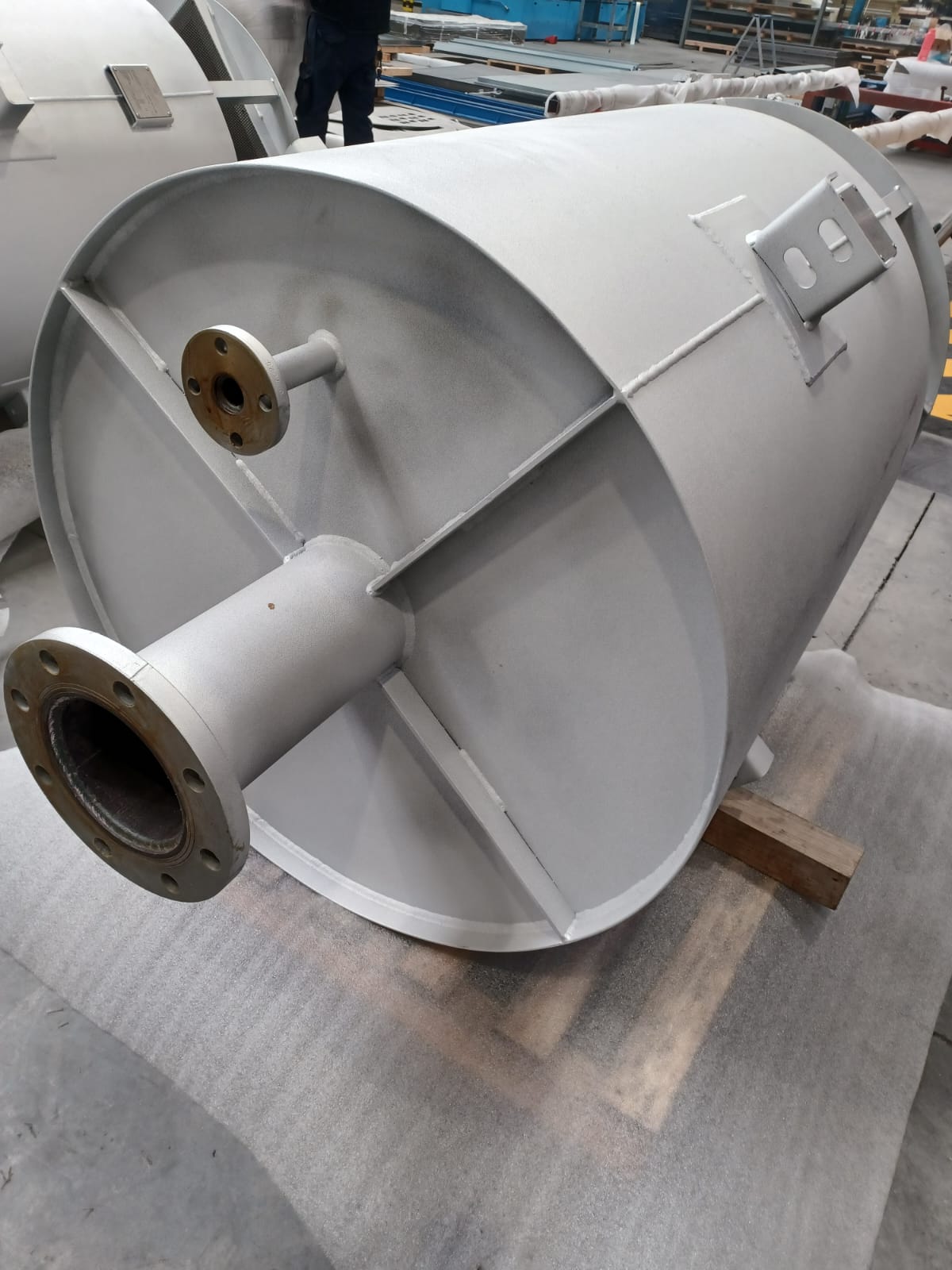
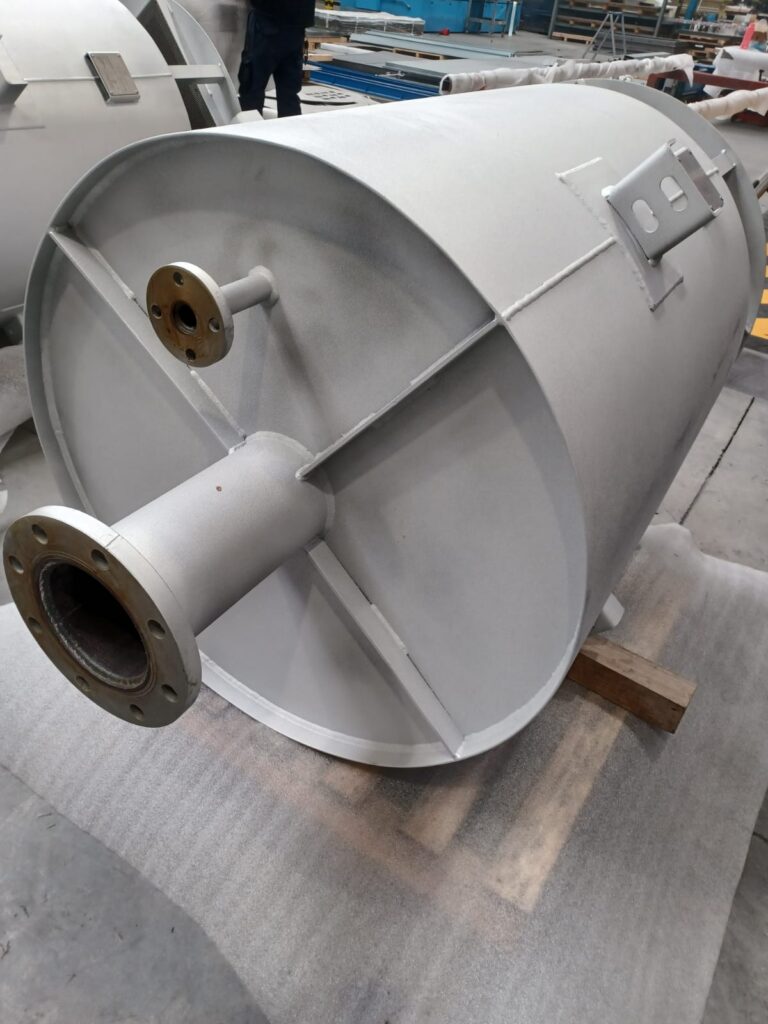
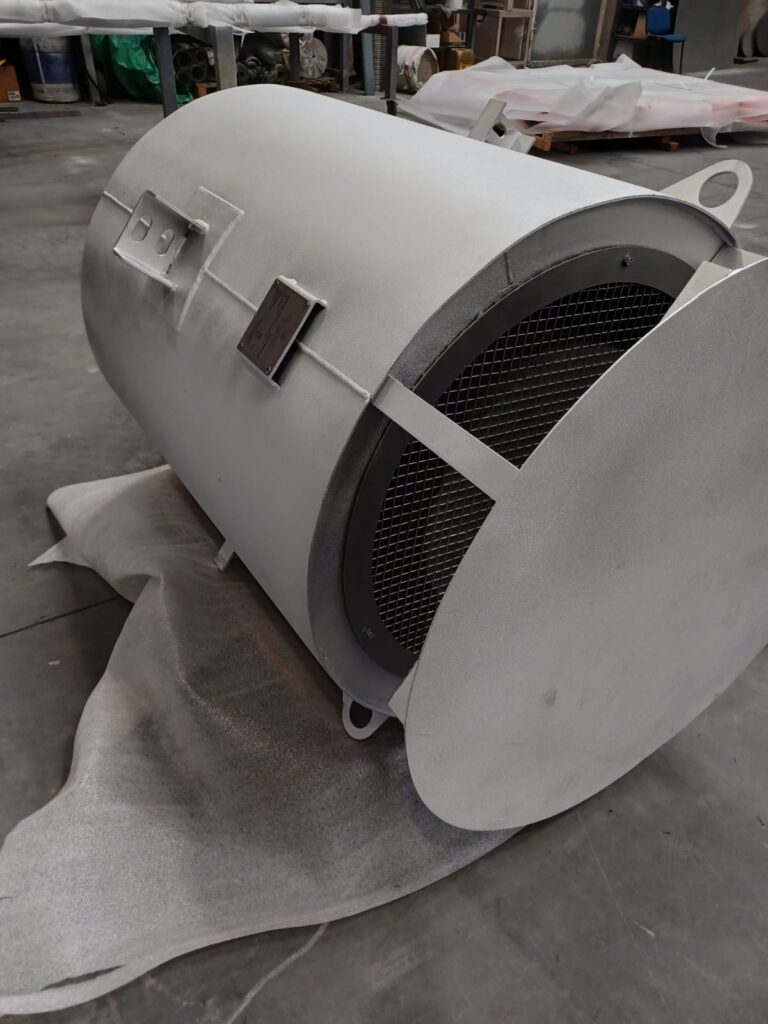
The images show the silencer manufactured for this project, photographed in the workshop before dispatch. Relevant installation details can be seen: inlet flange, bird screen at the outlet, lifting lugs, installation supports, auxiliary connection and surface finish for outdoor service.
What Needs To Be Controlled
For this type of application, selecting a silencer only by nominal diameter can lead to the wrong result. Two installations with the same connection may have very different flow rates, pressures, sound limits and mounting conditions.
| Technical question | Why it matters |
|---|---|
| Can the full required flow be discharged? | The silencer must not become a restriction that compromises the safety function. |
| What backpressure does it generate? | Backpressure must be reviewed against the safety valve and upstream installation. |
| What sound level is required? | The acoustic target must define distance, measurement conditions and environment. |
| How will it be installed? | Orientation, support, lifting, drainage and outdoor location affect the final design. |
| How are condensates drained? | Drainage helps avoid internal accumulation and improves reliability. |
Applied Solution
An industrial absorption silencer for atmospheric discharge was selected, sized by reviewing the complete process: fluid, pressure, flow rate, allowable backpressure, acoustic target and installation conditions.
- Industrial external body prepared for outdoor service.
- Acoustic material suitable for high temperature.
- DN150 PN16 inlet connection.
- DN25 drain connection for condensate management.
- Bird screen at the outlet.
- Lifting lugs and installation supports.
- Surface protection for C4-M outdoor environment.
Documentation and Quality
In an industrial project, technical performance is only one part of the supply. The customer also needs a documented, traceable solution managed from specification through to final delivery.
| Document or control | Role in the project |
|---|---|
| Equipment data sheet | Summarises design conditions, connections, materials and main data. |
| Dimensional drawings | Support integration review, support design, available space and mounting orientation. |
| Coating reports | Document surface preparation, applied system and coating traceability. |
| Thickness checks | Verify compliance with specified DFT. |
| Adhesion tests | Confirm coating quality when required by the project. |
| Quality dossier | Collects the information required for review, archive and audit. |
Why This Approach Matters
The value is not only in delivering equipment. It is in understanding the real problem: reducing noise without reducing safety, controlling backpressure, ensuring discharge capacity, anticipating outdoor installation and delivering coherent documentation for engineering, purchasing, quality, maintenance and operation.
At EFSVALVES, we treat this type of supply as a small technical project. We review the application, documentation, equipment integration and critical points before closing the solution.