This case study has been anonymised. The customer’s identity and selected project data have been omitted or generalised. Detailed sizing and selection criteria remain part of the application-specific engineering and are not disclosed.
What happens when a process needs overpressure protection and the gas temperature can approach 800 °C? Under these conditions, selecting a catalogue pressure safety valve is no longer enough. Temperature affects material selection, valve architecture, heat transfer to critical components and, in this case, the size of the system needed to provide the required relieving capacity.
This was the starting point for a Middle Eastern petrochemical project requiring three large-capacity PSVs for flue gas at a design temperature of 788 °C.
The Challenge: Protecting a Process at 788 °C
The application was connected to the gas outlet of a regenerator and combined several demanding conditions:
- flue gas at 788 °C;
- a set pressure of 3.8 barg;
- high required relieving capacity;
- severe process exposure;
- large valve dimensions;
- three PSVs within a common protection philosophy.
The objective was not simply to supply three valves. The system had to reflect the real process duty, using the applicable principles of API 526 and ASME Section VIII as a basis while adapting the configuration to the project-specific requirements.
Why a Standard PSV Was Not Enough
In a conventional application, much of the selection process can begin with standardised configurations. At almost 800 °C, the engineering problem changes. The fluid temperature does not mean that every PSV component reaches exactly the same value, but it does require an assessment of how heat travels from the body towards the upper valve assembly.
This is particularly important for components whose mechanical response must remain stable in operation. The question was therefore not only which material could withstand 788 °C, but what temperature each part of the valve would actually experience and how that exposure could affect performance.
| Process condition | Engineering implication |
|---|---|
| Flue gas at 788 °C | Assessment of materials, thermal gradients and the actual exposure of each component. |
| High relieving capacity | Selection of a large-capacity platform with 10″ × 14″ connections. |
| System backpressure | Joint evaluation of the discharge system and a balanced bellows configuration. |
| Plant availability | Two parallel duty units plus one equivalent standby PSV. |
Large Size and High Relieving Capacity
The required capacity called for large-capacity safety valves. The final configuration used 10″ × 14″ PSVs, with two units intended to operate in parallel and a third retained as standby.
Working with three valves of this size also allowed the solution to be developed around the actual service conditions. Instead of forcing the process into an existing standard configuration, materials, architecture and thermal management were adapted to the duty.
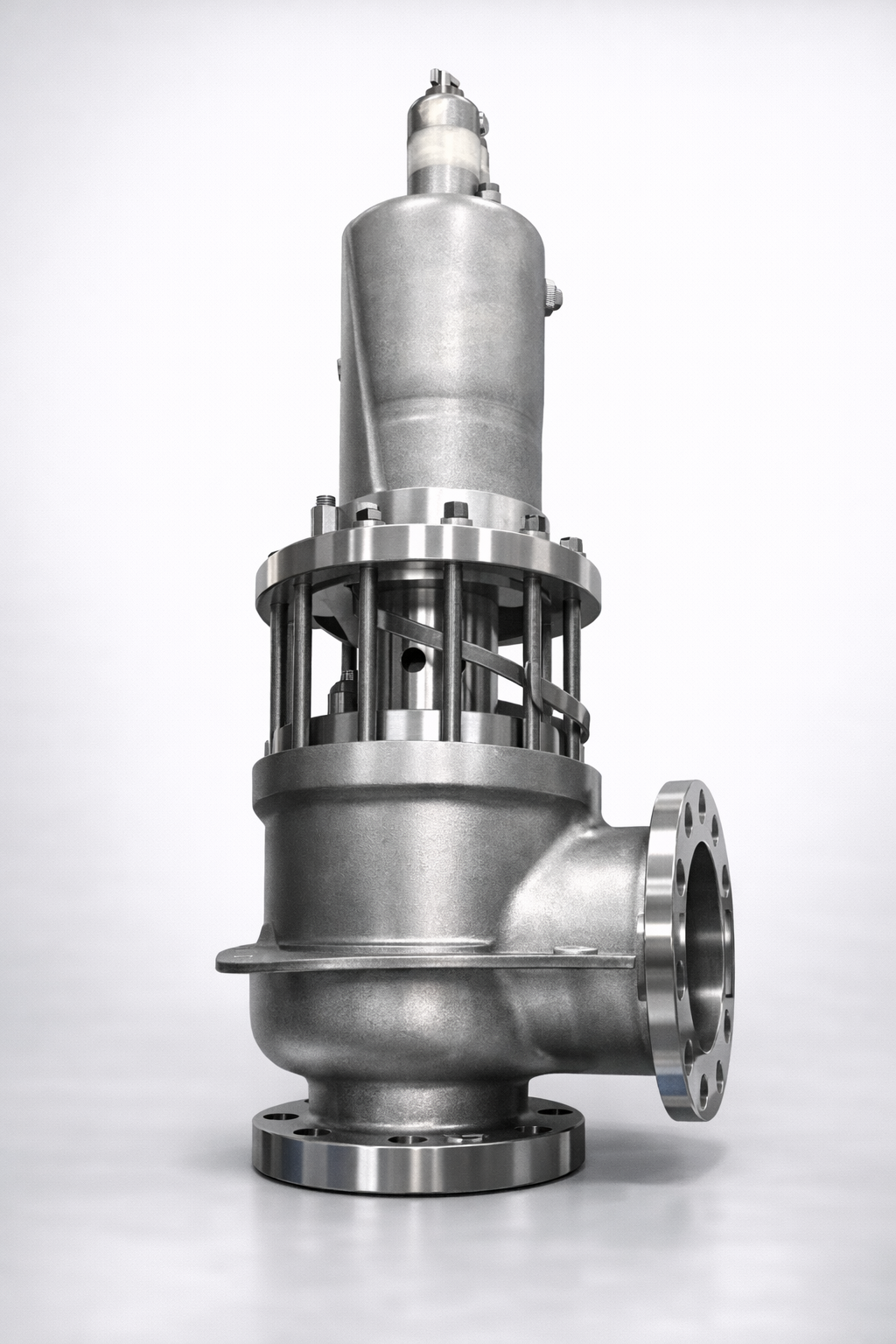
A Valve Architecture Designed for Thermal Service
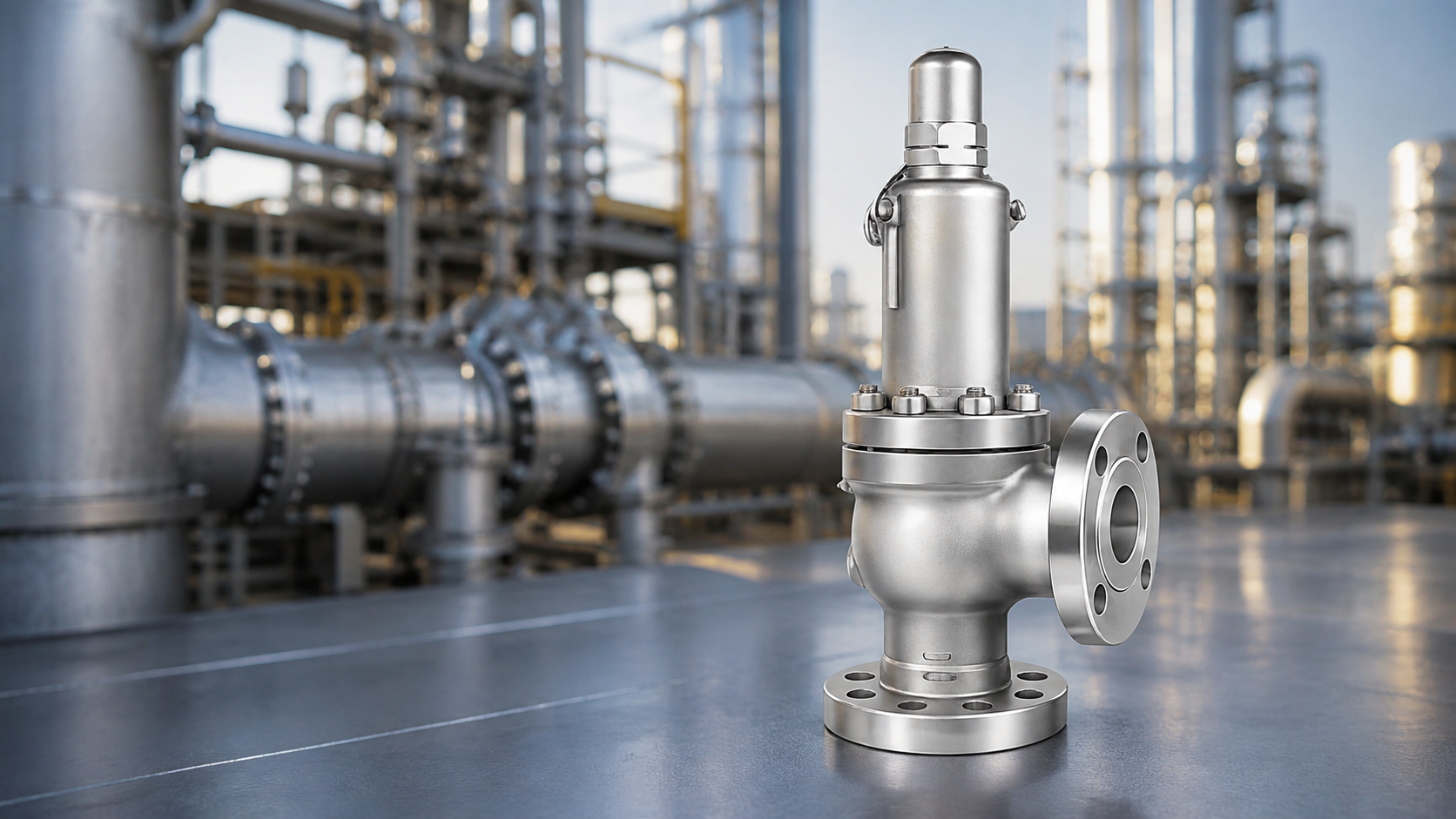
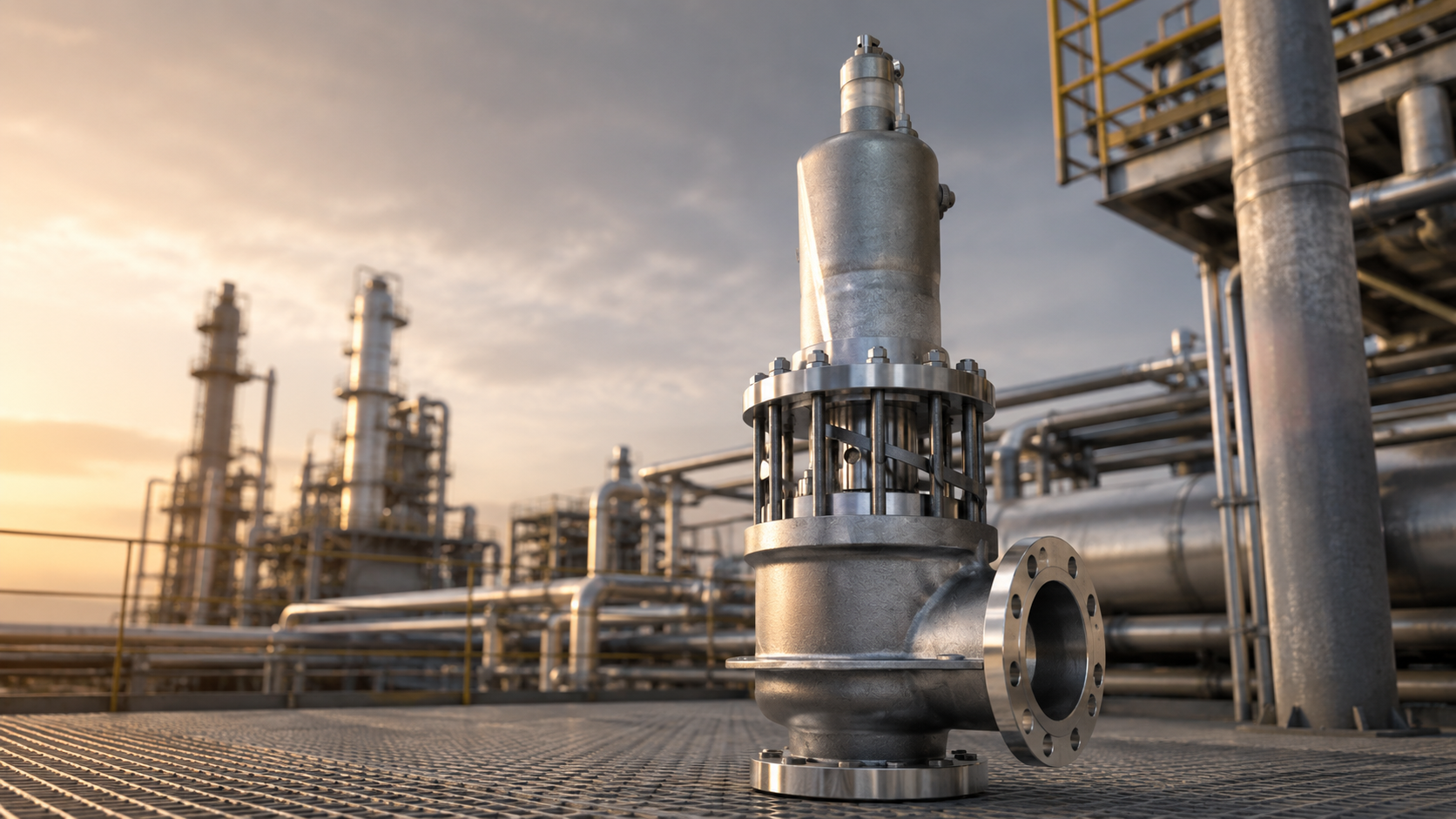
EFSVALVES developed the assembly from a large-capacity PSV platform and adapted it to the intended service. The principal selected materials included:
| Component | Material | Role in the configuration |
|---|---|---|
| Body | ASTM A351 CF10M | Main pressure-retaining envelope selected for the project conditions. |
| Metallic bellows | Inconel 625 | Part of the balanced configuration under demanding thermal and mechanical conditions. |
| Spring | Inconel X-750 | Stable mechanical response within the anticipated thermal envelope. |
Material selection was only one part of the solution. Controlling heat transfer towards the upper valve assembly was equally important. A thermal dissipation section between the body and the upper assembly was incorporated to limit heat reaching components whose mechanical response had to remain within the intended operating conditions.
Balanced Bellows Configuration
The valves used an Inconel 625 metallic bellows as part of a balanced design selected for this particular duty.
For this type of service, choosing between a conventional PSV and a balanced bellows PSV cannot be reduced to a single parameter. Backpressure, discharge system conditions, temperature, fluid and the required valve behaviour must be assessed together. Detailed sizing and selection criteria remain confidential project engineering.
Based on API 526 and ASME Section VIII
The design used the applicable principles of API 526 and ASME Section VIII together with the customer’s project requirements. This distinction matters for special equipment: standards provide a sound basis for pressure safety valve selection and configuration, while actual process conditions may demand an application-specific engineered solution.
Temperature, capacity, materials, backpressure, balanced design and thermal protection were therefore analysed as parts of the same engineering problem.
Two Duty PSVs and One Standby Unit
The final arrangement included two PSVs operating in parallel and one additional equivalent unit on standby. The third valve was not simply an extra spare; it formed part of the system availability strategy.
An identical standby unit allows maintenance or replacement to be addressed without introducing a different configuration later in the plant, while also simplifying spares, procedures and maintenance planning.
Manufacturing, Testing and Supply
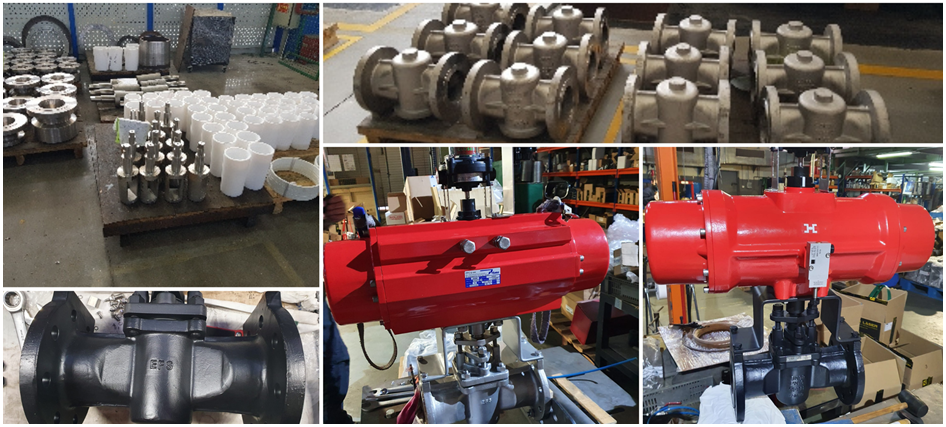
The valves were manufactured and tested in Spain within the agreed project scope. Supply included material traceability, EN 10204 3.1 documentation and the corresponding inspections and tests.
Foundry work, machining, integration and testing were completed in approximately 20 weeks. For special equipment of this size, industrial execution is part of the engineering challenge: materials, manufacture, assembly and validation must remain consistent with the original design basis.
Project Result
The process received an overpressure protection solution developed specifically for its operating conditions. A 788 °C design temperature, high relieving capacity, 10″ × 14″ connections, severe-service materials, balanced bellows configuration, thermal management and a two-duty-plus-one-standby strategy resulted in an architecture very different from that used in conventional service.
For high-temperature service, a PSV cannot be selected from pressure, size and body material alone. The thermal and mechanical behaviour of the complete system must be understood.
Frequently Asked Questions
Do all PSV components reach the gas temperature?
Not necessarily. Fluid temperature is an essential design input, but different areas of the valve can experience different thermal exposure. Heat transfer, geometry and installation conditions must therefore be assessed.
Why was a balanced bellows PSV selected?
The configuration followed a combined assessment of backpressure, discharge system, temperature, fluid and the required response. No single parameter determines the correct design for every application.
What does the thermal dissipation section do?
It limits heat transfer from the body to the upper assembly, helping keep mechanical components within their intended operating envelope.
Why were three PSVs supplied?
Two valves were intended for parallel duty and the third served as an equivalent standby unit within the plant’s availability and maintenance strategy.
Would two applications at 788 °C use the same valve?
No. Fluid, relieving capacity, pressure, backpressure, installation, materials and availability philosophy must all be assessed in addition to temperature.
Large-Capacity PSVs for High-Temperature Service
EFSVALVES engineers pressure safety valves for duties beyond normal catalogue ranges, including high temperature, large capacity, backpressure and special materials. Explore our large-capacity safety valve range →
Send us the main process conditions so our engineering team can review the appropriate configuration. Discuss your project with EFSVALVES →