LARGE CAPACITY PRESSURE SAFETY VALVE

EF1400L
  • Engineered for large flow and high-capacity relief requirements
  • Project-specific large-capacity configuration
  • Application-specific sizing, materials and documentation
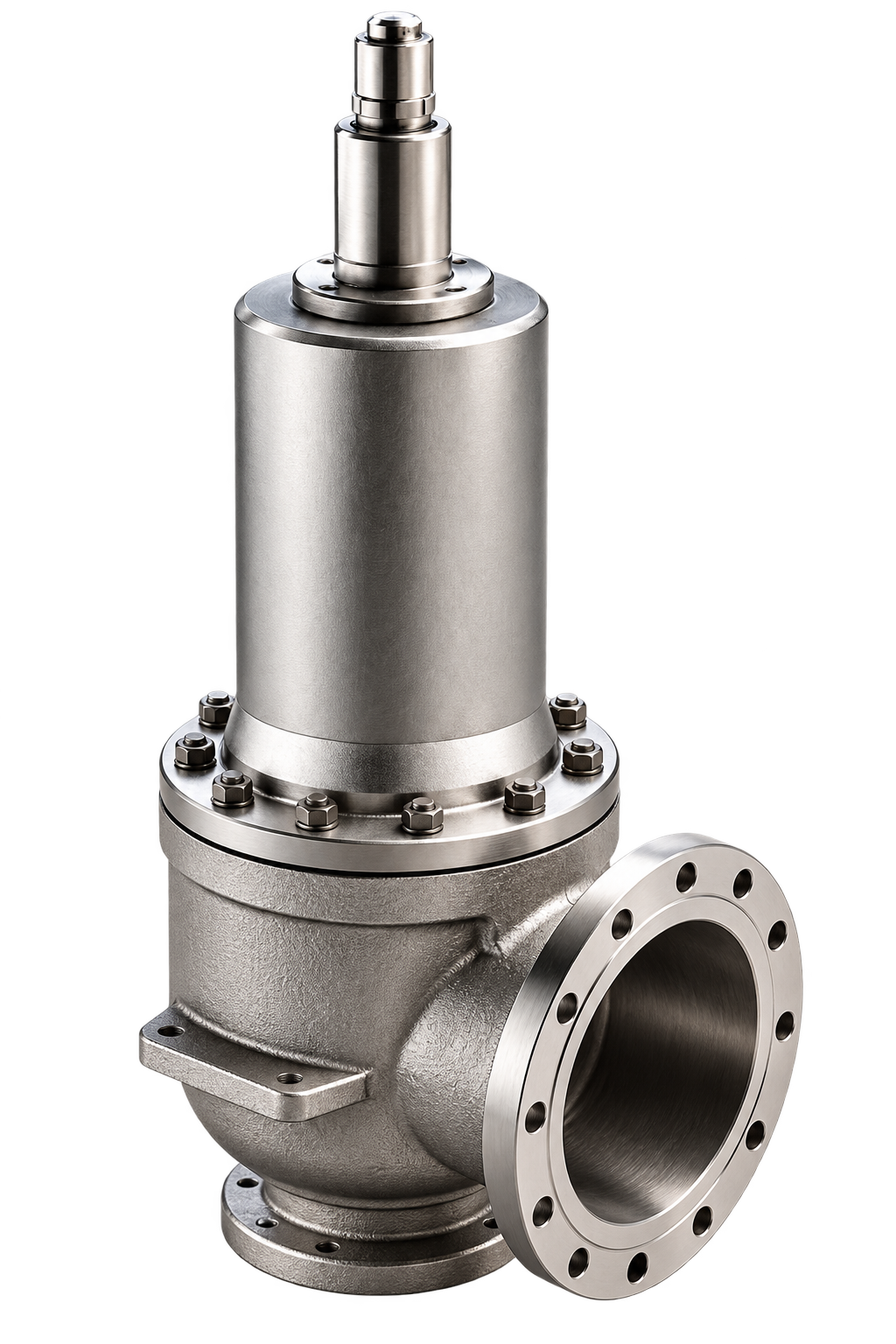
Large capacity pressure safety valve engineered for high-flow relief applications

Applications

Configured Service Scope
Chemical
Gas
Petrochemical
Water

Key Specifications

CAPACITYEngineered for large flow requirements
NOMINAL SIZESDN250 x DN350 / DN300 x DN400 / DN400 x DN500
PRESSURE RATINGPN16
TEMPERATURE RANGE-196°C to +400°C
DESIGN BASISAPI 520 / 521 / ASME BPVC Large sizes beyond API 526
MATERIALSNodular Iron / Carbon Steel (1.0619) / Stainless Steel (1.4409)
CONNECTIONSFlanged (EN 1092, RF / BW / SW)

Selection & RFQ Assistant

Help us identify the right solution
Guided request

Build a technical RFQ line with service data, sizing conditions, accessories and documents.

01
Service
02
Process
03
Options

FAQs

The EF1400L is an engineered pressure safety valve for large-flow pressure-relief applications requiring valve sizes beyond typical standard catalogue configurations. It can be considered for large pressure vessels, process equipment, steam, gas and water-related pressure systems where the required relieving duty leads to a large valve size. Final selection is based on the actual process conditions and required capacity.
Safety-valve size is determined by the required relieving capacity, not by pressure alone. At relatively low pressure, steam or gas can represent a very large volumetric flow. If a large quantity of fluid must be relieved, the required flow area can therefore become substantial. This combination of low or moderate pressure and high flow is one of the situations in which large-diameter safety valves can be required.
The EF1400L can be considered for high-capacity relief duties involving large equipment and process systems. Potential applications include: - Large pressure vessels - Large steam systems - Exhaust or reduced-pressure steam - Gas and vapour systems - Process and relief headers - Water-system air vessels or surge vessels requiring overpressure protection The actual valve size and configuration must be determined by the required relief duty.
Yes. Large safety valves can be relevant to sugar mills with large exhaust-steam and reduced-pressure-steam systems, particularly where relatively low steam pressure is combined with substantial flow. The application should not be selected from the industry name alone. Required steam capacity, set pressure, operating conditions, connections and applicable project requirements must be evaluated.

ABOUT EF1400L

The EF1400L Large Capacity Pressure Safety Valve is an engineered pressure relief solution for demanding industrial applications with large flow requirements. Developed around a project-specific engineering design basis, each valve is configured for the required relieving capacity, process conditions and applicable project specification.

The EF1400L supports the protection of large pressure vessels, process equipment, relief headers and high-capacity systems. Valve size, pressure rating, materials, trim and accessories are defined through an application-specific engineering review using the required set pressure, relieving pressure, back pressure, fluid properties and operating temperature.

This project-engineered approach combines high-flow pressure relief performance with manufacturing, inspection, documentation and dependable supply support.

Frequently Asked Questions

The EF1400L is an engineered pressure safety valve for large-flow pressure-relief applications requiring valve sizes beyond typical standard catalogue configurations. It can be considered for large pressure vessels, process equipment, steam, gas and water-related pressure systems where the required relieving duty leads to a large valve size. Final selection is based on the actual process conditions and required capacity.
Safety-valve size is determined by the required relieving capacity, not by pressure alone. At relatively low pressure, steam or gas can represent a very large volumetric flow. If a large quantity of fluid must be relieved, the required flow area can therefore become substantial. This combination of low or moderate pressure and high flow is one of the situations in which large-diameter safety valves can be required.
The EF1400L can be considered for high-capacity relief duties involving large equipment and process systems. Potential applications include: - Large pressure vessels - Large steam systems - Exhaust or reduced-pressure steam - Gas and vapour systems - Process and relief headers - Water-system air vessels or surge vessels requiring overpressure protection The actual valve size and configuration must be determined by the required relief duty.
Yes. Large safety valves can be relevant to sugar mills with large exhaust-steam and reduced-pressure-steam systems, particularly where relatively low steam pressure is combined with substantial flow. The application should not be selected from the industry name alone. Required steam capacity, set pressure, operating conditions, connections and applicable project requirements must be evaluated.
It can be considered where the required relief capacity and operating conditions require a large valve configuration. Large exhaust-steam systems can involve high volumetric flows even at relatively low pressure, which can result in a substantial required relieving area. Final sizing must be based on the actual steam duty.
It can be evaluated where a pressurised air vessel or surge vessel requires safety relief against overpressure and the calculated relieving capacity requires a large valve. The function must be clearly distinguished from hydraulic surge control. The safety valve protects the pressure-containing vessel or associated air system, while the surge vessel itself manages hydraulic transients in the water pipeline. Selection requires the vessel design pressure, set pressure, relief scenario and required capacity.
It can be considered where a downstream system requires overpressure protection and the credible failure of pressure-reducing equipment creates a large relief requirement. The required safety-valve capacity must be established from the actual failure and relieving scenario. Valve size should not simply be matched to the pressure-reducing valve or downstream pipeline diameter.
Yes, provided that the backpressure and complete discharge arrangement are compatible with the selected safety-valve configuration. Large relief flows can have a significant effect on common headers and downstream piping. The expected header pressure and relevant relieving scenarios should therefore be included during valve selection.
No. The safety valve is sized from the required relieving capacity rather than directly from the pipeline diameter. A large process pipe does not automatically require a safety valve of the same nominal size. However, where the required flow is very high and the relieving pressure is relatively low, the calculated relieving area can itself result in a very large valve and connection size.
The required valve size depends primarily on: - Required relieving capacity - Fluid - Set and relieving pressure - Temperature - Backpressure - Fluid properties - Applicable code - Connection and system requirements The nominal size is therefore an output of the relief sizing and engineering review, not the starting point of valve selection.
The current EF1400L page lists: - DN250 x DN350 - DN300 x DN400 - DN400 x DN500 with a published PN16 pressure rating. The applicable size, material and connection arrangement should be confirmed against the actual operating and relieving conditions.
Depending on the applicable code and pressure-relief philosophy, some systems may use several safety valves to provide the total required relief capacity. Whether this is preferable to one large-capacity valve depends on the required capacity, available connections, set-pressure arrangement, operating scenarios and discharge-system design. This should be determined as part of the overall relief-system engineering.
Very large relieving flows can create significant pressure losses and backpressure in the discharge piping. These conditions can affect valve behaviour and the ability of the complete relief system to achieve the required duty. The discharge piping, vent or relief header should therefore be evaluated together with the safety valve.
The main information normally required includes: - Process fluid - Required relieving capacity - Set pressure - Relieving pressure or allowable overpressure - Backpressure - Operating and relieving temperature - Fluid properties - Connection requirements - Material requirements - Applicable project specification Inspection, testing and documentation requirements should also be identified during the RFQ stage.
The current EF1400L page lists Nodular Iron, Carbon Steel 1.0619 and Stainless Steel 1.4409 as available materials. The published connection information includes flanged construction associated with EN 1092, with the exact connection arrangement to be confirmed according to the project configuration. Material and connection selection must be checked against the actual pressure, temperature, fluid and project requirements.
The EF1400L is an engineered large-capacity valve rather than a fixed catalogue selection. Delivery time therefore depends on size, material, configuration, quantity, testing, inspection and documentation requirements. The applicable lead time is confirmed individually with each quotation.
Yes. The EF1400L can be supplied within EPC and project-managed environments where technical, quality, inspection and documentation requirements are defined as part of the project. Inspection, testing, material certification, drawings and project documentation can be established according to the agreed supply scope. Project-specific requirements should preferably be identified during the RFQ stage.