Starting out in the industrial engineering world can be overwhelming. You might just be involved in selecting a valve or processing equipment when the questions start rolling in:
- «Do you prefer cast or forged?»
- «Carbon steel, stainless steel or superduplex?»
- «Do you need low temperature certification?»
If your reference point is simply «iron» and «steel,» do not worry. You are not alone. This article offers a practical overview to help you feel confident in your early projects.
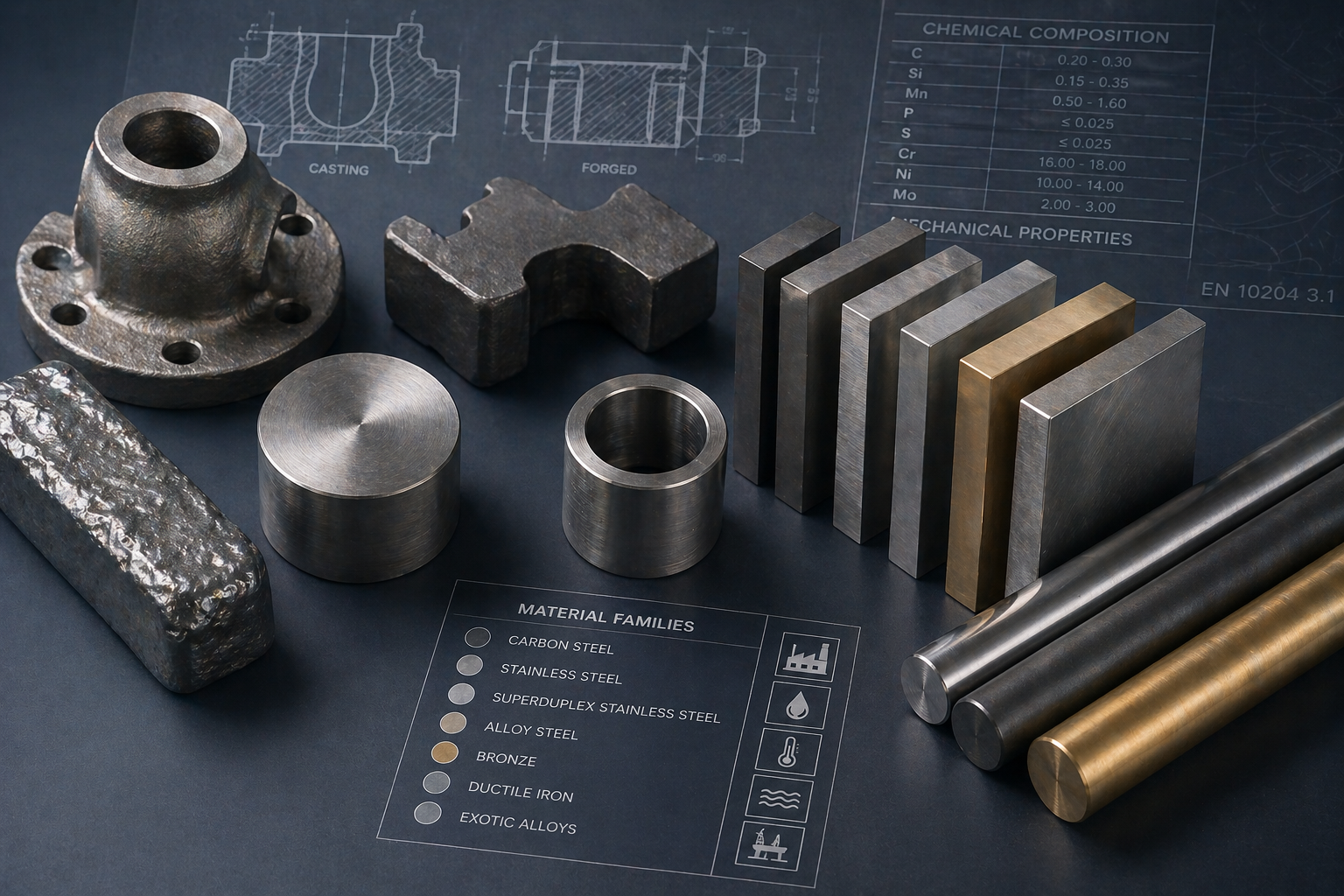
Cast vs. Forged: What Is the Difference?
Cast (Casting)
- Molten metal is poured into a mold and allowed to solidify.
- It allows complex shapes and larger parts.
- It is often more cost-effective for intricate designs and larger batches.
- It is commonly used for valve bodies, flanged components and internal cavities.
Forged (Forging)
- The metal is heated and mechanically shaped under pressure.
- This improves grain structure and mechanical strength.
- It provides higher resistance to impact and fatigue.
- It is typically used in safety-critical parts such as high-pressure valve bodies.
Tip: if you are unsure, ask about the service conditions and consult your supplier or technical team before locking the material route.
| Format | Best for | Typical valve use | Main trade-off |
|---|---|---|---|
| Cast | Complex shapes and larger bodies | Valve bodies, bonnets, flanged components | Requires suitable casting quality control |
| Forged | High pressure and high mechanical stress | Critical bodies, nozzles, small high-pressure parts | Higher cost and geometry limitations |
| Bar stock | Small or simple machined parts | Stems, seats, rings and small components | Machining waste and size limits |
Most Common Material Families in Valves and Piping
Here is a practical overview of the materials most frequently used in valves and industrial systems.
| Material family | Why it is used | Typical applications | Watch out for |
|---|---|---|---|
| Carbon steel | Versatile, economical and strong | General industrial processes and utility lines | Limited corrosion resistance without coating or allowance |
| Low temperature carbon steel (LTCS) | Maintains toughness at sub-zero temperatures | Cryogenics, LNG, chilled water systems | Temperature certification and impact testing requirements |
| High temperature alloys | Resistance to creep and oxidation at elevated temperature | Steam systems, power plants, refining and petrochemical service | Correct alloy grade and heat treatment |
| Stainless steel | Corrosion resistance and clean surface finish | Food, pharmaceutical and chemical industries | Chlorides, crevice corrosion and grade selection |
| Superduplex stainless steel | High resistance to chlorides and seawater | Desalination, offshore and harsh chemical environments | Higher cost and strict welding/fabrication control |
| Ductile iron | Affordable and more impact-resistant than gray cast iron | Water networks and wastewater systems | Pressure, temperature and corrosion limits |
| Bronze and marine bronze | Copper-based alloys with good seawater corrosion resistance | Marine, naval and seawater service lines | Compatibility with fluid chemistry and galvanic effects |
| Exotic alloys | High-performance corrosion or temperature resistance | Severe service with Inconel, Hastelloy, Monel or titanium | Cost, availability and correct specification |
Material Formats: Bars, Castings and Forgings
Another common question is how the material is supplied. The answer affects cost, lead time, mechanical performance and documentation.
- Bars: machined for small or simple parts.
- Castings: ideal for complex geometries and larger production volumes.
- Forgings: preferred for high-stress parts or when project certifications demand it.
Making Confident Material Decisions
Do not be afraid to ask. No one expects a junior engineer to know every alloy, standard and exception by heart. A good engineer asks better questions before making a decision.
- Ask about operating conditions: fluid, pressure and temperature.
- Check applicable standards such as ASME, API, EN or ISO.
- Review technical datasheets and certification requirements.
- Consult experienced suppliers and manufacturers when the service is critical.
Being proactive will help avoid costly mistakes and increase your credibility with project, quality and procurement teams.
Quick Checklist for Junior Engineers
| Question | Why it matters |
|---|---|
| What is the operating temperature and pressure? | Defines mechanical strength, rating and low/high temperature requirements |
| Is there corrosion, seawater or chemical exposure? | Drives stainless, duplex, bronze or exotic alloy selection |
| Which standard applies: API, ASME, DIN, EN or ISO? | Controls design, material grades, testing and documentation |
| Is the material compatible with the process fluid? | Prevents corrosion, contamination and premature failure |
| What is the long-term maintenance strategy? | Balances purchase cost against lifecycle reliability |
Conclusion: Your Go-To Guide for Early Projects
Selecting the right material is a key responsibility, and one you will get better at quickly. Understanding cast vs. forged parts, carbon steel vs. stainless steel, superduplex or bronze will help you earn trust and grow faster.
And remember: asking is not a sign of weakness. It is how you learn, prevent mistakes and lead better technical decisions.
Need support with material selection for a valve application? EFSVALVES can help review the fluid, pressure, temperature, corrosion risk and certification requirements for your project.