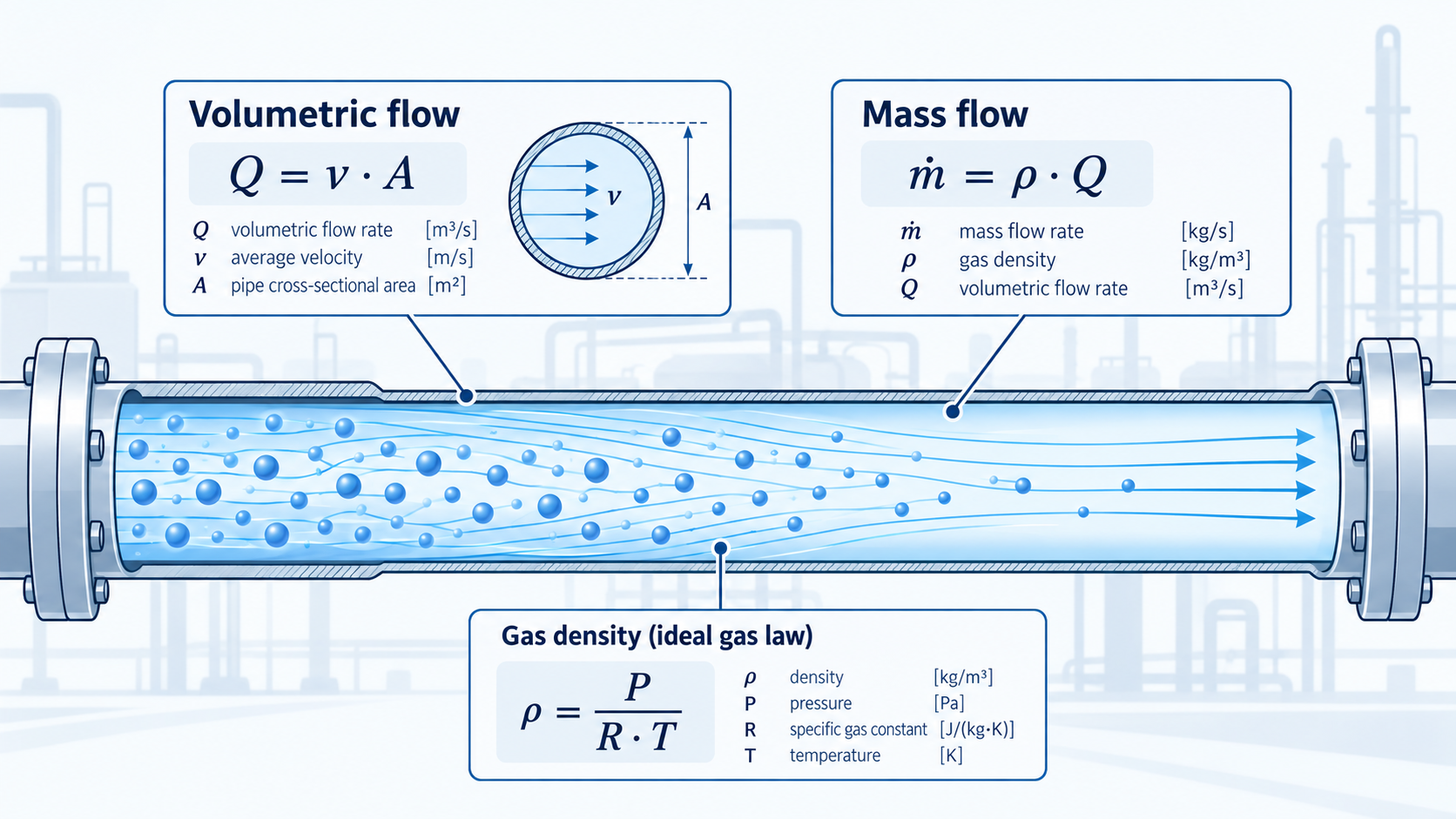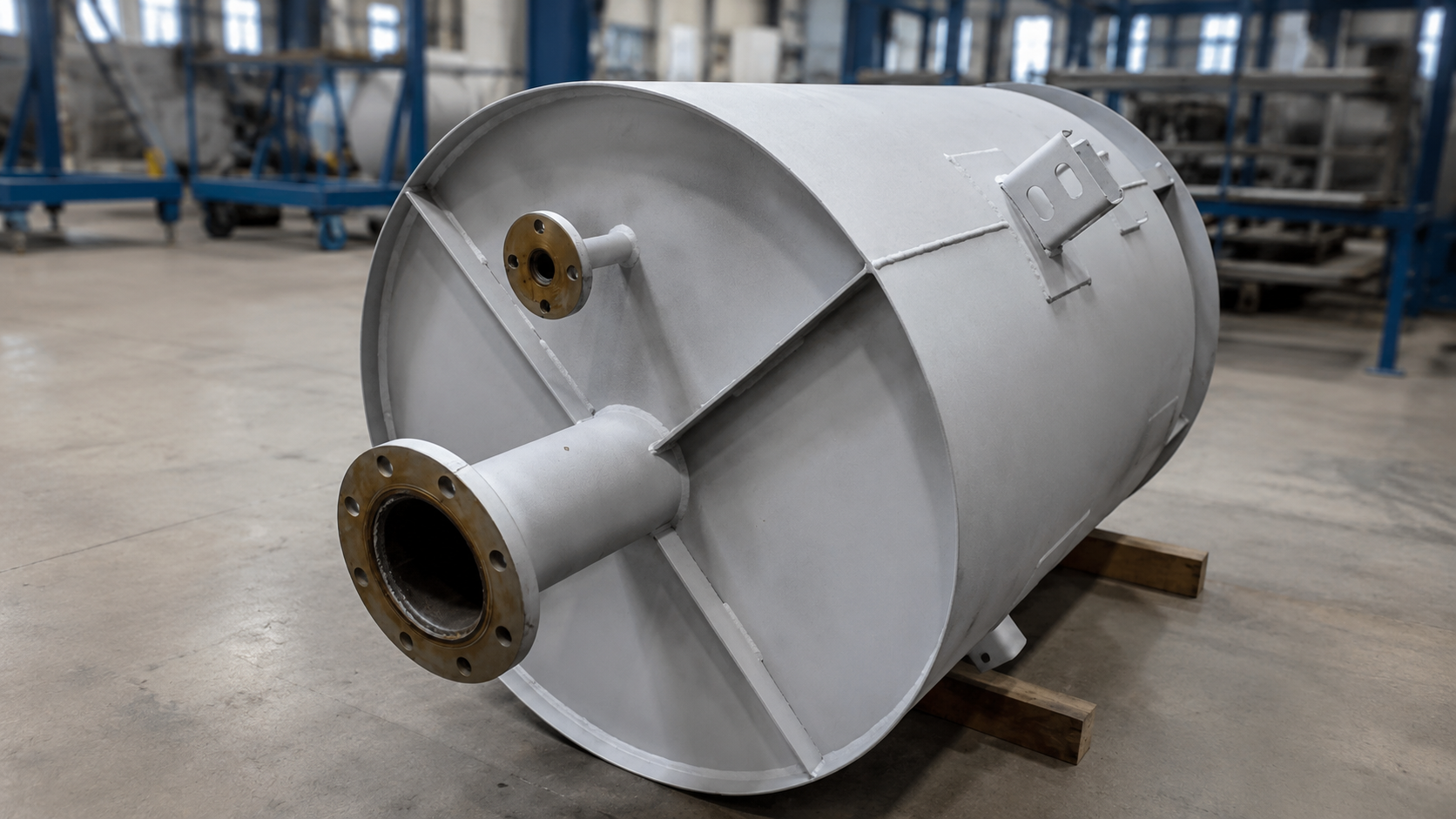
In many industrial projects, a vent silencer is initially treated as a simple end-of-line accessory. In reality, when the application involves steam discharge, compressed gases, safety valves, blowdown, purging or atmospheric venting, the silencer becomes part of a wider system involving pressure, temperature, flow rate, backpressure, acoustic performance, materials, supports, thermal expansion and real installation conditions.
A Silencer Is Not Defined Only By Pipe Diameter
Connection size is necessary, but it is not a complete specification. A vent silencer should be selected from the full process conditions, not only from the flange or thread size.
An incomplete request can lead to quotations that are difficult to compare, oversized solutions, technical doubts during approval or late modifications during installation.
Required Process Data
For a proper technical assessment, the following data should normally be provided at the quotation stage.
| Required data | Why it matters |
|---|---|
| Fluid | Steam, air, nitrogen, natural gas or another process gas affects sizing, materials and acoustic behaviour. |
| Discharge flow rate | The flow rate must be clear and include units. Without it, attenuation and backpressure cannot be assessed reliably. |
| Upstream pressure or inlet pressure | Pressure defines the energy of the discharge and strongly influences silencer design. |
| Operating temperature | Temperature affects materials, acoustic packing, coating system and installation safety. |
| Maximum allowable backpressure | Especially important downstream of safety valves, relief valves or critical discharge systems. |
| Type of discharge | Continuous, intermittent, emergency, purge, blowdown and safety valve discharge are not equivalent cases. |
| Installation environment | Indoor, outdoor, marine, corrosive or high-temperature environments change material and protection requirements. |
Backpressure Is A Critical Point
In applications connected to safety valves, relief valves or discharge systems, the backpressure generated by the silencer can be a critical factor. The objective is not only to reduce noise. The silencer must not compromise the correct operation of the system to which it is connected.
When the silencer is installed downstream of a safety valve or relief valve, the allowable backpressure and its effect on the valve and discharge line should be carefully reviewed.
Define The Acoustic Target Clearly
Requesting “a low-noise silencer” is not enough. To define the acoustic scope correctly, the sound requirement must be measurable and comparable.
| Acoustic item | What to define |
|---|---|
| Maximum sound level | For example, a target expressed in dB(A). |
| Measuring distance | A guarantee at 1 metre is not the same as a guarantee at 10 metres. |
| Measurement location | Height, direction and plant location may matter depending on the project. |
| Operating condition | Continuous operation, occasional discharge and emergency blowdown are different scenarios. |
| Internal plant limit | Any site-specific acoustic standard should be shared from the beginning. |
Materials, Coating And Environment
The material and protection system should be selected according to the fluid, temperature, corrosion risk and external environment. In many cases, carbon steel with a suitable coating system is sufficient. In other projects, stainless steel, special materials or specific surface protection may be required.
- Indoor or outdoor installation.
- Expected corrosion category and painting requirements.
- Compatibility between service temperature and coating system.
- Need for rain protection, anti-bird mesh or external protection.
- Drainage or condensate purge, when applicable.
Installation: Orientation, Weight, Supports And Space
A vent silencer can have significant weight and dimensions. Before approving a solution, installation constraints should be reviewed: vertical or horizontal orientation, available space, installation height, access for assembly and maintenance, connection type, lifting lugs, brackets and possible interference with existing structures.
The silencer should not be treated as a simple pipe extension. Weight, supports and mounting arrangement are part of the technical review.
Loads, Moments And Expansion Joints
In hot lines, especially steam lines, thermal expansion can generate significant stresses. Loads may also appear due to pipe weight, misalignment, vibration or movement during discharge.
Even if the silencer is correctly designed as an item of equipment, the installation must avoid uncontrolled pipe loads being transmitted to the silencer, the valve or the connection nozzle. The support of the inlet line should be reviewed, and when installation engineering considers it necessary, expansion joints, guides, anchors or equivalent flexibility should be assessed.
The mechanical strength of the silencer and the global validation of the piping are related, but they are not exactly the same scope.
Silencer Scope Versus Installation Scope
To avoid misunderstandings, responsibilities should be separated from the beginning of the project.
| Silencer specialist normally defines | Installation engineering normally validates |
|---|---|
| Acoustic attenuation | Pipe supports |
| Generated backpressure | Loads on nozzles or valves |
| General silencer geometry | Thermal expansion of the line |
| Main materials and accessories | Need for expansion joints |
| Weight, dimensions and supply documentation | Supporting structure, accessibility and final installation |
Technical Documentation To Request
Depending on the project, the quotation should clearly state which documents are included and which ones require an additional cost.
- Silencer datasheet.
- Preliminary dimensional drawing.
- Estimated weight.
- Main materials.
- Expected attenuation level.
- Estimated backpressure.
- Connection type.
- Painting or surface protection.
- Installation, operation and maintenance manual.
- Material certificates, CE/PED marking or additional tests, when applicable.
How To Compare Offers Correctly
Comparing silencers only by price can be risky. Before making a decision, check whether both offers include the same technical scope.
| Comparison point | Check before approval |
|---|---|
| Sound level | Same guaranteed level and same measuring distance. |
| Backpressure | Same allowable or estimated backpressure basis. |
| Materials and coating | Same material grade, coating system and environmental assumptions. |
| Accessories | Rain hood, protection mesh, drainage, supports or lifting points included or excluded. |
| Documentation and tests | Same documents, inspections, certificates and final dossier requirements. |
| Scope exclusions | Same design scope and same installation assumptions. |
Common Mistakes When Requesting A Vent Silencer
- Requesting the silencer only by connection size.
- Not indicating flow rate or flow units.
- Not defining maximum allowable backpressure.
- Not specifying the target sound level.
- Not indicating the measuring distance.
- Not considering whether the discharge comes from a safety valve.
- Not reviewing weight, supports and moments.
- Not considering thermal expansion in steam lines.
- Forgetting accessories such as rain hood, drainage or protection mesh.
- Comparing offers with different technical scopes.
- Requesting the silencer too late, when the layout is already fixed.
- Not separating equipment scope from installation scope.
Final Recommendation
A vent silencer is not just an acoustic device. It is part of a process, pressure, temperature, noise and mechanical installation system. A good initial specification helps avoid problems related to backpressure, noise, installation, supports or late modifications.
In projects involving steam, compressed gases, safety valves or critical discharges, it is advisable to review the technical scope from the early stages and work with a supplier capable of understanding not only the acoustic requirement, but also the process and installation implications.